


Solutions to a bubbling toilet or changes in the water level in the bowl.
The plumbing system in your home needs two things to work properly: water and air. While the first one is obvious, the second one might not be, so let us explain:
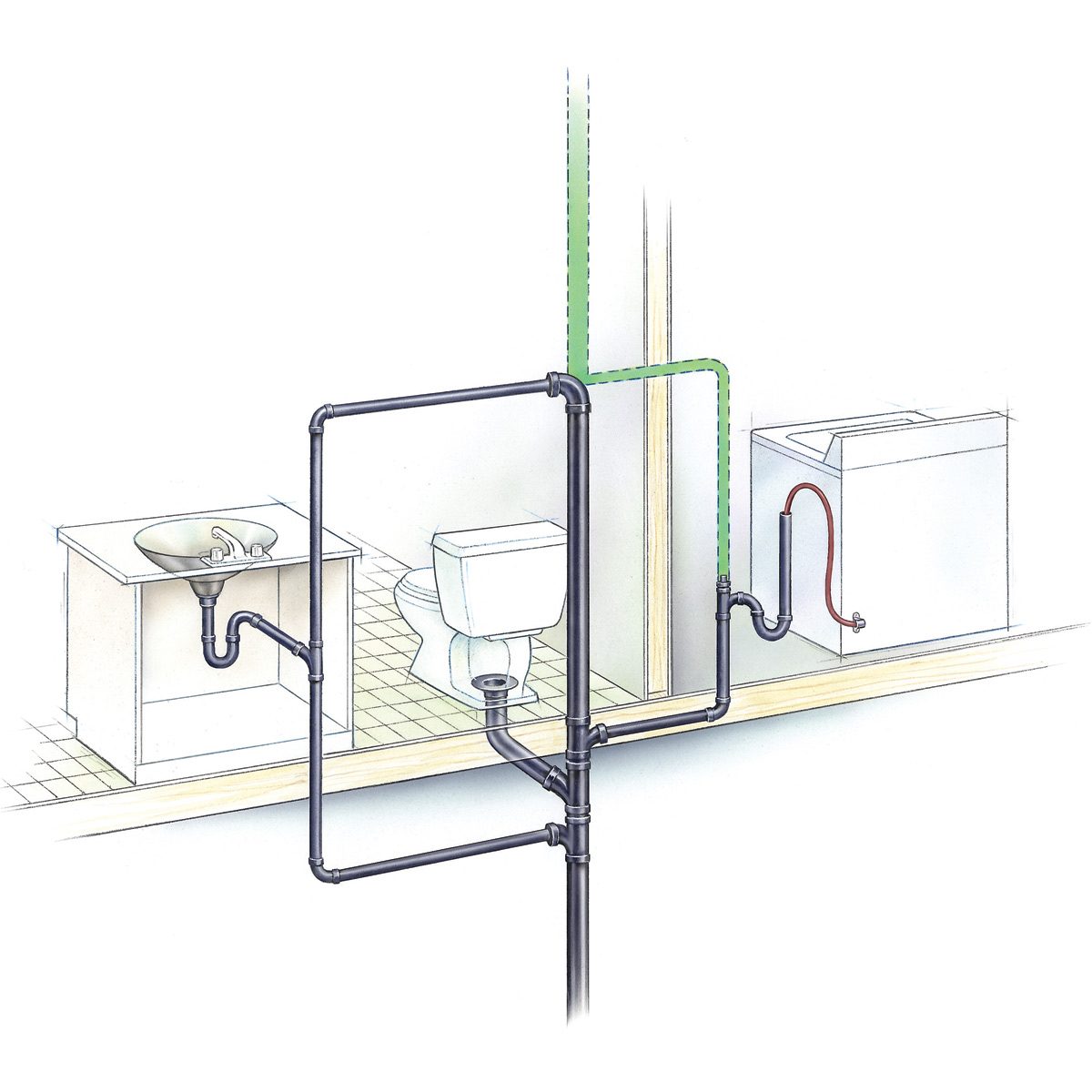
In order for water to flow down a drain, the pipes need air to equalize the pressure. That’s why all residential plumbing fixtures have to be vented. The plumbing vents are part of the drainage system, and together the entire network is known as the Drain, Waste and Vent (DWV) system.
Just like the drain pipes, the plumbing vents can get blocked, creating problems similar to those caused by a blocked drain line. In this post, there is a more detailed explanation of how vents work, along with some tips for resolving issues with the vent system.
On This Page
How Drain Plumbing Works
Without the air from the vent, water flows more slowly and can even back up. What’s more, if the vents get blocked, water rushing down the drains creates enough suction to pull water from nearby P-traps.
What’s a P-trap?
It’s the only thing standing between your household and the sewer, and if it dries out, your nose will know it.
Plumber David Lewis explains: “A P-trap is the U-shaped pipe you’ll often find under sinks, tubs, showers and laundry room stand pipes. It holds a small amount of water, creating a seal that stops sewer gases from backing up into your home. Without it, you’d be dealing with some bad smells and potentially harmful fumes. It also helps catch debris and keeps clogs from making their way down the line, which could be a lot harder to clear.”
Why is the Toilet Bubbling?
All the pipes in a building’s vent network tie into the main vent stack, which is typically located on your roof. When there’s an obstruction in the plumbing vents, it usually originates there. If you do experience a clogged vent, one of the first places you’ll notice the problem is in the toilet.
If air bubbles are rising up through your toilet bowl (except when it flushes), or you notice the water level rising and falling, you may have a clogged or partially blocked vent. You’re more likely to have a vent problem if you notice toilet bubbling when you drain a nearby water-using appliance like a clothes washer. Your drain is gasping for air and trying to pull it through the toilet.
- Pro tip: A clogged waste line can produce similar symptoms. If you suspect a drain clog, here are some steps you can take to unclog it.
Why is the Toilet Water Level Rising and Falling?
Blocked plumbing vents make the water level in the toilet rise and fall, but they aren’t the only causes. An incorrectly pitched waste line might be responsible. A hairline crack in the toilet trap could be causing a slow leak. It could also be a clog in the waste line that you might have to remove with a snake. If you can’t trace the problem to these causes, it’s the vents you have to worry about.
The drain in the toilet bowl is basically a P-trap, and we’ve already explained what happens to P-traps when a vent gets blocked. You may notice related drain problems that could indicate a blocked vent, like slow draining from a bathtub or sink, or rotten, sulfurous smells emanating from a drain. Those smells are from sewer gas, which contain methane and hydrogen sulfide that can cause nausea or dizziness. Besides being noxious, sewer gas is flammable, so it’s dangerous when leaking into your home like that.
How to Unclog a Plumbing Vent
“You’ll need to check the vent on your roof, since that’s where the vent pipe exits,” advises Lewis. “Sometimes leaves or squirrels can get in there and cause a blockage. If you’re not sure what’s going on, a plumber can use a camera to check inside the pipe and pinpoint the clog.”
Don’t want to call a plumber? Use a flashlight to look down the pipe and see if you can spot the blockage. If it’s relatively shallow, you can try to remove it with a drain auger. After you’ve pulled it out, take a hose with an adjustable nozzle on the jet setting and blast out the remaining debris.
If you can’t see the blockage or reach it with a snake, you can just use the hose to try and clear it. Oftentimes, that’s all you need. However, if the obstruction is something really large, that’s probably when it’s time to call a pro.
How to Unclog a Plumbing Vent Without Getting on the Roof
Your roof may be too steep to walk on, it may be icy or you may just be squeamish about climbing up there. If your house has an attic, no problem; you can do the job from there. Locate the vent pipe (which you’ll see exiting through the roof), cut out a section, and do the inspection and cleaning from there. Afterwards, you can put the pipe back together with some PVC fittings and glue.
Because this involves removing and repairing pipes inside your home, it’s a more complicated task, so unless you’re confident in your ability to repair plumbing pipes, it’s probably best to call a plumber.
FAQ
How can I prevent vent clogs?
Small animals often climb inside roof vents to make nests, so to prevent that, cover the vent opening with a screen. Once you’ve done this, go on the roof every year (or have someone else do it) to clear debris from the screen.
In cold climates, roof vents can ice over, creating a blockage that can last as long as the cold weather. This normally happens with undersized two-inch pipe. The best way to prevent it is to replace the section of pipe sticking out through the roof with a three-inch pipe. You can also de-ice the vent from inside the attic using a hair dryer.
What is an air admittance valve (AAV)?
Sometimes a sink P-trap is too far from the vent network to make connecting it impractical. This can happen in basement sinks, kitchen island sinks and sinks on the opposite side of the house from the main vent system. To avoid installing a complicated vent for that P-trap, plumbers often use an air admittance valves (AAV).
An AAV is a small, dome-shaped mechanical vent. You install it on the horizontal arm leading from the P-trap to the drain. It contains a mechanism that forces it open when water is draining to allow air into the pipe. It closes when the water has stopped flowing.
AAVs are easy to install, and they aren’t affected by blockages in the plumbing vents, but they aren’t legal everywhere. Consult your local building department before deciding to use one.
About the Expert
- David Lewis is a seasoned professional in the field of HVAC, plumbing and home services. He is the owner of Mission AC, based in Houston, TX.