


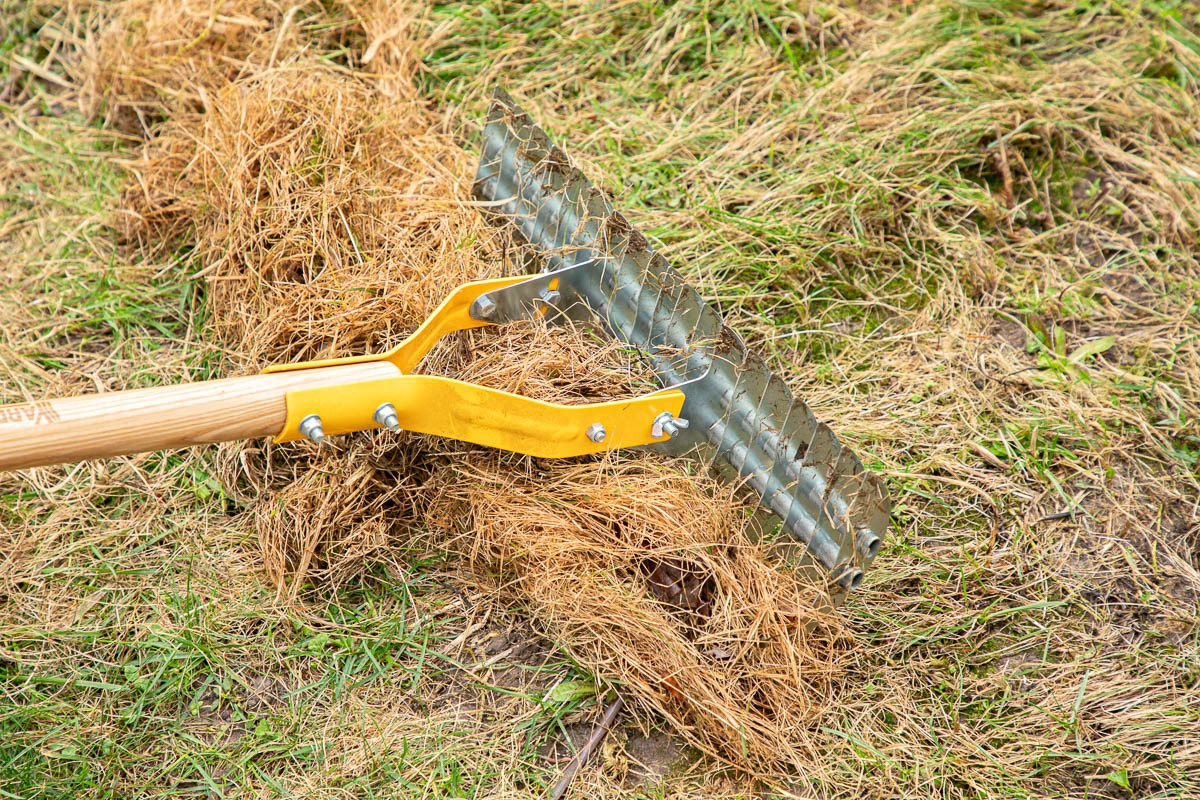
Step-by-step instructions to dethatch a lawn with any equipment.
 Time
Time 1-4 hours
 Complexity
Beginner
 Cost
Cost$10 - $60
Introduction
Learn exactly how to dethatch a lawn with our straightforward instructions using motorized equipment or simple thatching rakes.
If you want a vibrant, healthy lawn, one of the necessary tasks you’ll need to undertake is dethatching. So, what is dethatching? It is the process of removing dead grass and organic material that accumulates between the soil and the grass blades. Ideally, a healthy layer of thatch should not exceed 1/2-inch in thickness. When thatch becomes thicker than this, it can prevent your grass from receiving essential nutrients and water.
Signs that it’s time to dethatch your lawn include visible brown patches of dead grass, slow grass growth, and a bouncy feel when you walk on it. Most lawns need dethatching every 2-3 years, with the best timing being early spring or fall when grass can recover quickly.
There are several ways to dethatch your lawn, with options ranging from handheld rakes to powered dethatchers for larger yards. For average-sized yards, renting a powered dethatcher can be a practical option, as it saves you the hassle of storing the equipment and is affordable to rent for an afternoon.
Ultimately, there is no one-size-fits-all solution for dethatching; the best option depends on your specific needs.
Tools Required
- Dethatcher rake
- Leaf rake
- Power dethatcher (optional)
Materials Required
- Grass seed
- Lawn bags
Project step-by-step (7)
Mow the lawn
The first step is to mow the lawn so that the grass is about half its usual length. This will help prevent damage to the grass during the dethatching process and make it easier to remove the thatch.

Using a powered dethatcher
If you are using a powered lawn dethatcher, start by deciding which side of the yard you want to work on. Remove any objects from the yard. To begin dethatching, pull the lever to engage the blades. Make overlapping perpendicular passes across the yard by pushing and pulling the dethatcher in a back-and-forth motion. Once you’ve completed the dethatching, disengage the blades and use a leaf rake to clean up the thatch.

Adjust the dethatch rake angle
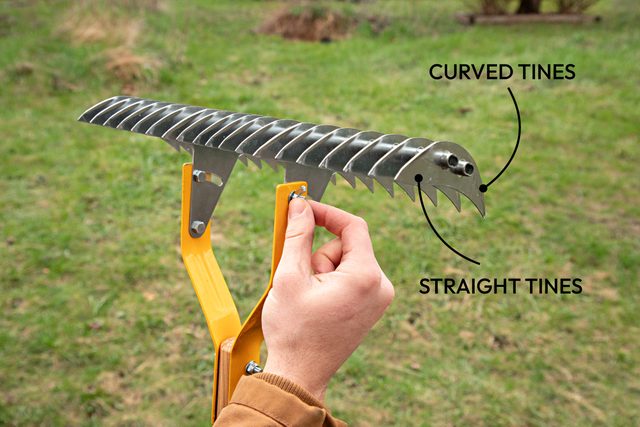
When using a thatching rake, it’s important to adjust the angle at which the rake contacts the ground to maximize its effectiveness. First, loosen the wing nuts near the head of the rake and swivel the tine blades to your desired angle. The steeper the angle of the blades, the more they will penetrate the grass. Start with the least aggressive angle to prevent damage to your lawn, and make adjustments as necessary.
Notice thatching rakes have two types of tines: straight flat tines for removing thatch and curved tines for light ground cultivation and collecting loose thatch.
Rake up the thatch
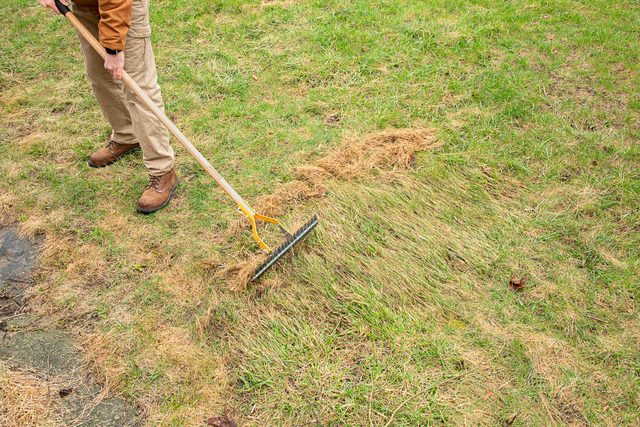
To use the rake, start by placing the straight-tine blades on the grass. Pull the rake towards you in a back-and-forth motion. Pulling the rake removes the thatch, while pushing it backward helps clear the thatch from the rake. Repeat this process in small sections to keep track of the areas you have completed.
Clean up loose thatch
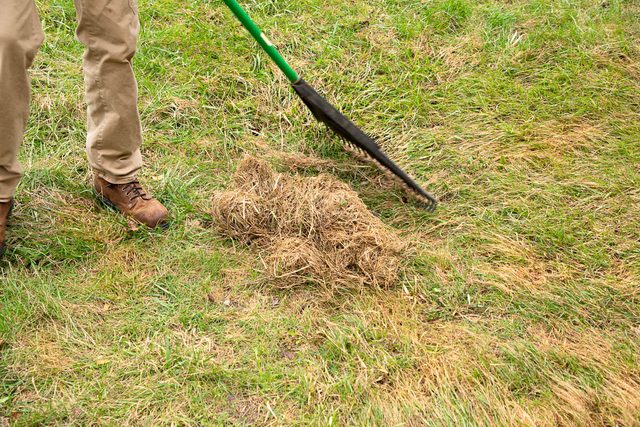
Use a leaf rake to collect the loose thatch and place it into lawn bags.
Seed the bare spots
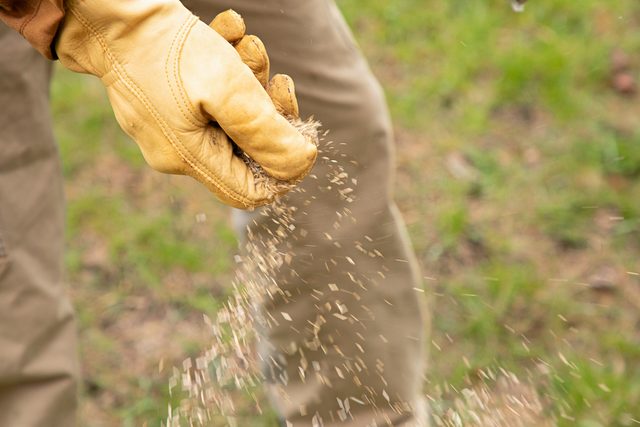
If you see any bare spots in the yard, first loosen the soil with the curved tines on the thatching rake or a cultivator to create a good seedbed. Then, spread the grass seed and water it.
FAQ
What is thatch?
The thatch on a lawn is comprised mostly of dead grass clippings and other plant matter, such as stems and roots. It accumulates on top of the soil surface but below the grass lawn you see.
How long does it take to dethatch a lawn?
An average-sized 5,000-square-foot lawn will take approximately half a day or slightly longer to dethatch using a power dethatcher, including mowing beforehand and raking up thatch. If you decide to do the same 5,000-square-foot lawn with a thatching rake, I’d say it’ll take the better part of a weekend.