


Learn about these bizarre, crawly creatures—from plump and stripy to horned and dangerous—and the adult moths and butterflies they become.
8 Crazy Cool Caterpillars You Could Find in Your Backyard

1
/
8
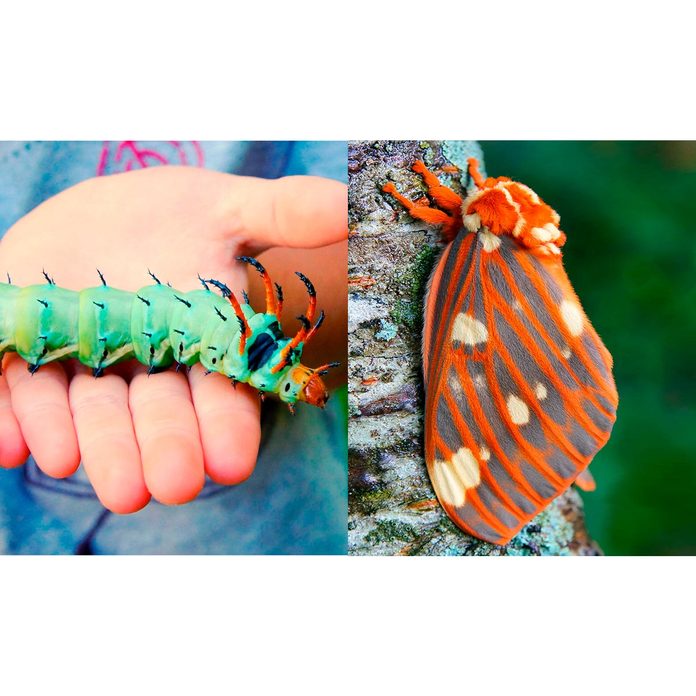
Regal Moth
Nicknamed hickory horned devils, these caterpillars grow up to 6 inches long. Despite their fearsome look and size, they’re harmless to humans. But for potential predators, bright colors and gigantic horns are a clear sign to stay away. When disturbed, these bugs make a loud, rapid clicking noise for good measure.
Range: Eastern United States
Host Plants: Hickory, walnut, persimmon and sycamore
2
/
8
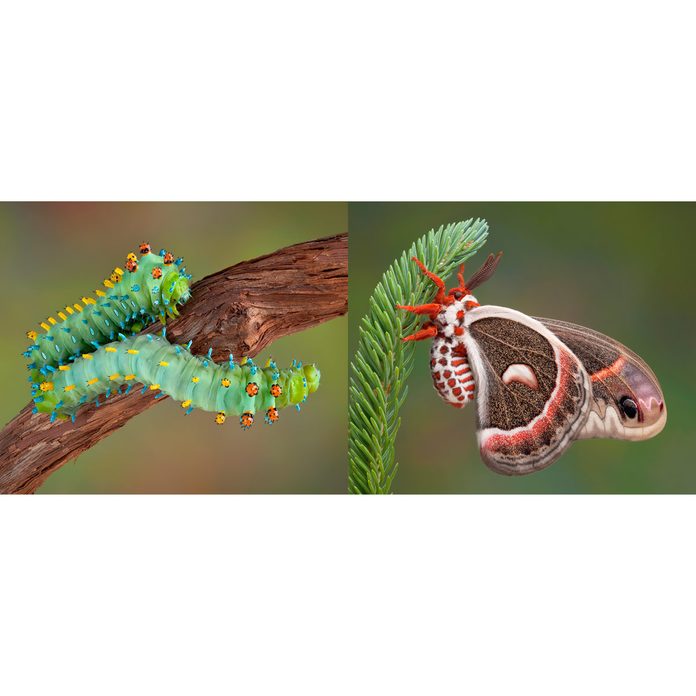
Cecropia Moth
Cecropia silk moths have a wingspan up to 7 inches, and their caterpillars are almost as enormous. In its later stages, the larva’s blue-green body is covered in large, colorful bumps called tubercles. The tiny hairs they sport are harmless to humans.
Range: Eastern United States and Canada
Host Plants: Maple, cherry, birch and others
Did you know? National Moth Week is July 20-28. Leave a porch light on or hang a white sheet and shine a black light on it to get the best view of moths at night.
3
/
8
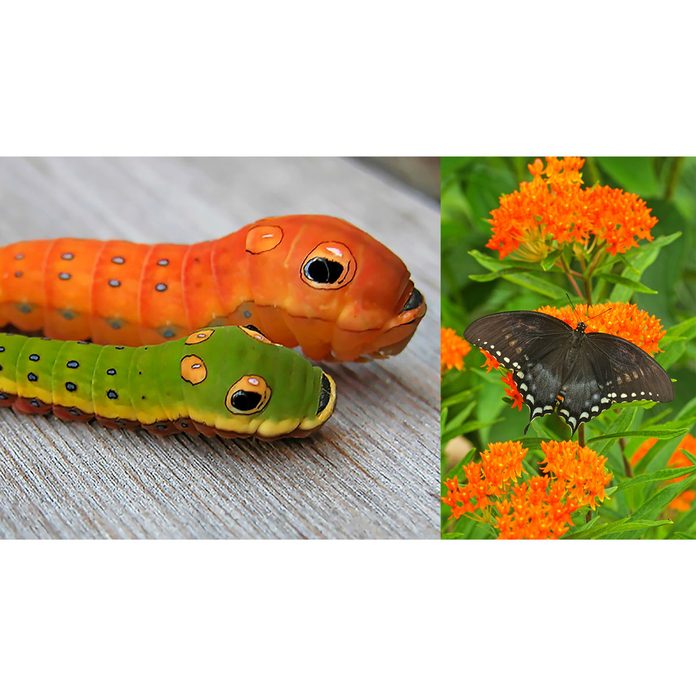
Spicebush Swallowtail
What appear to be giant eyes are really just eyespots to fool predators into thinking this insect is much larger than it is. These creatures roll leaves around their bodies to create safe shelters to eat and rest. Later stages of this caterpillar are bright green, turning a brilliant orange just before the final molt into a chrysalis.
Range: Eastern United States
Host Plants: Spicebush, camphor, sassafras, sweet bay and tulip tree
4
/
8
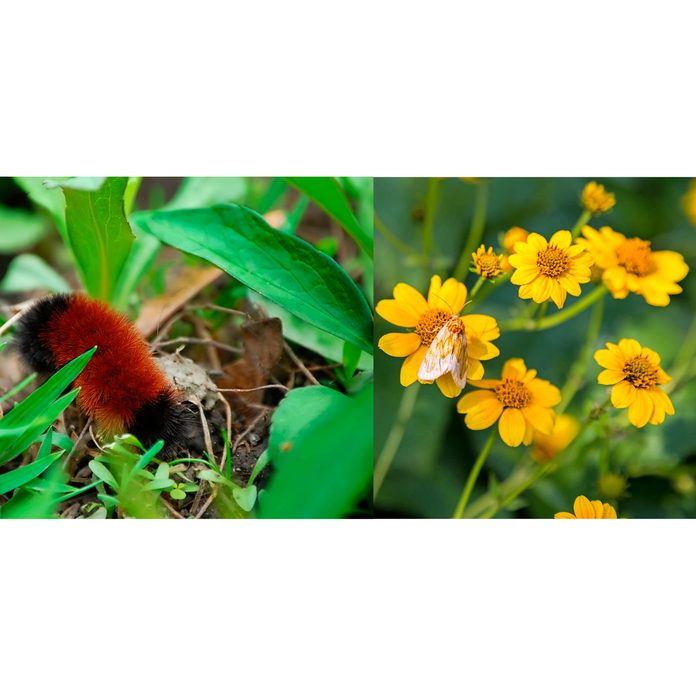
Isabella Tiger Moth
Woolly bear is the popular name for Isabella tiger moth caterpillars. Folklore says the wider the dark stripes, the harder the coming winter. In reality, the dark brown band on woolly bears merely widens as they grow throughout the season. Isabella tiger moths overwinter as caterpillars, freezing solid and thawing in the spring to continue eating and growing.
Range: United States and lower Canada
Host Plants: Generalist feeder—eats a large variety of plants and trees
5
/
8
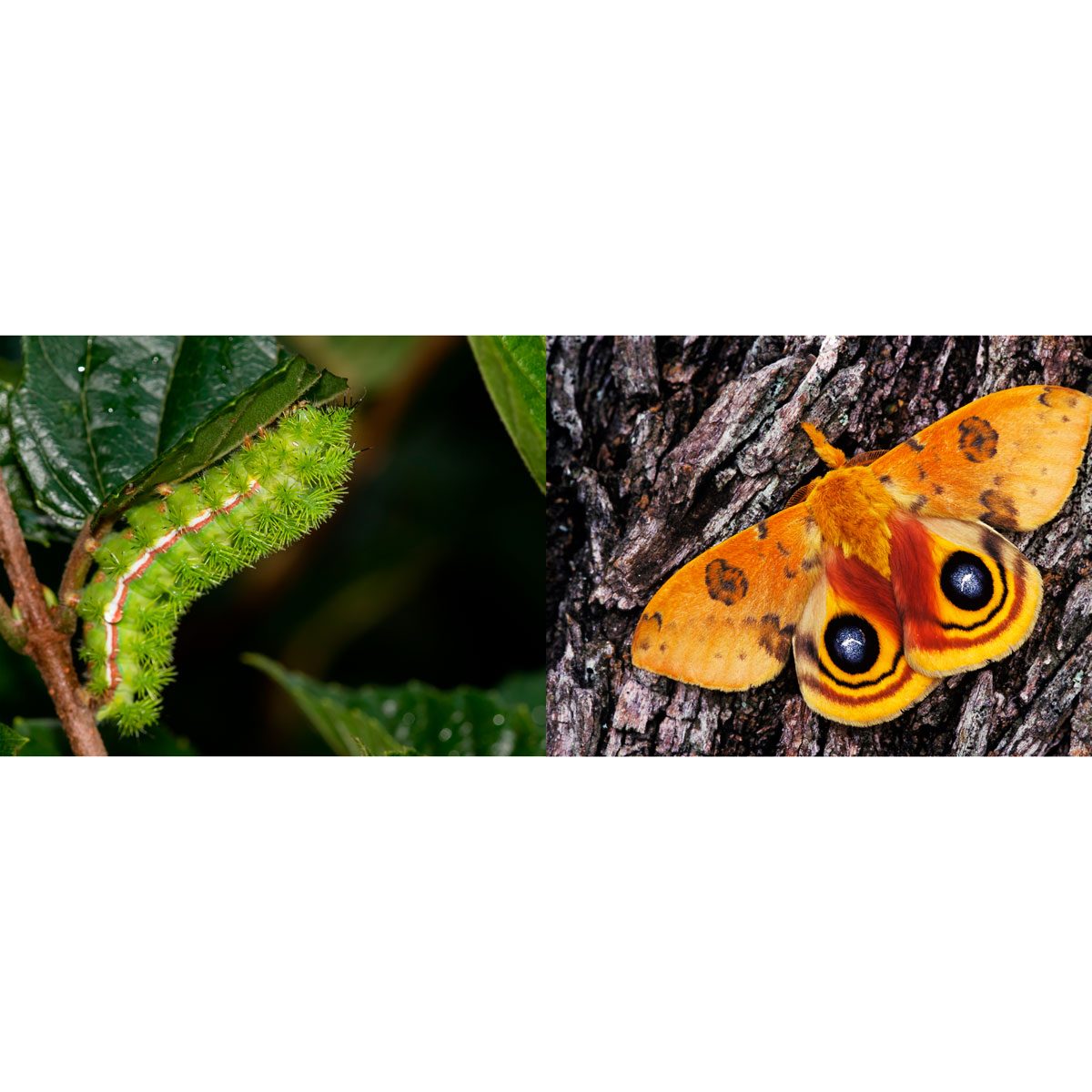
Io Moth
In nature, bright colors often signal to predators that an animal is toxic, and that’s definitely the case with io (pronounced EYE-oh) caterpillars. The bright green spikes are covered in tiny hairs that release toxins when touched. It causes excruciating pain in humans and other predators, so hands off!
Range: Eastern United States
Host Plants: Hackberry, willow, redbud, mesquite and more
6
/
8
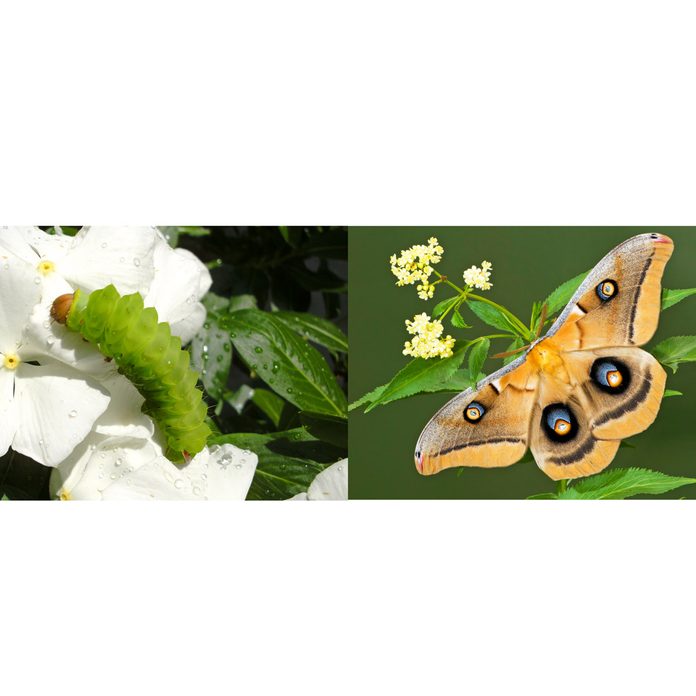
Polyphemus Moth
This unique caterpillar boasts a lime green hue and geometric shape instead of the usual rounded body. The adult moth is one of the largest in North America, with a wingspan of nearly 6 inches. Silk moths like the polyphemus don’t eat when they are adults, so their larvae are especially voracious. Polyphemus caterpillars grow up to 4 inches long.
Range: United States and lower Canada
Host Plants: Birch, willow, maple, oak and others
7
/
8
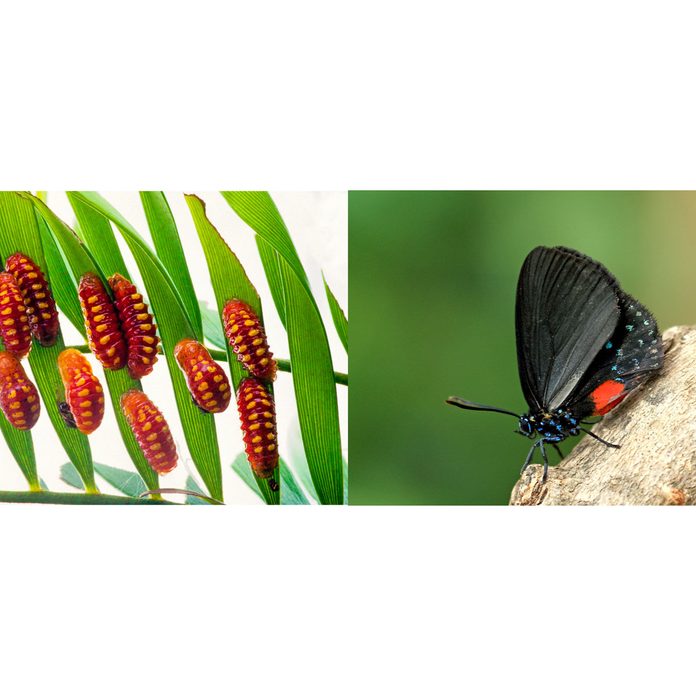
Atala Hairstreak
As you might guess, its bright colors are a warning—this little creature carries toxins in its body, but it’s safe to touch. Atala butterflies were nearly wiped out in the 20th century due to habitat destruction, but they are making a comeback in southern Florida and spreading north. Newly hatched caterpillars are light tan and relatively unimpressive, but they grow into their fantastic color in a day or two.
Range: Southern Florida and a few Caribbean islands
Host Plants: Coontie and other cycads
8
/
8
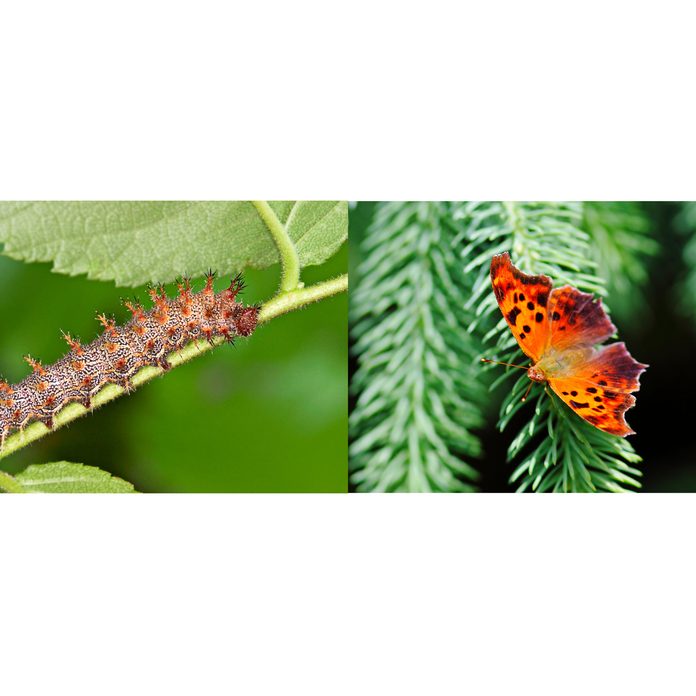
Question Mark
This insect is carpeted in tiny, nonvenomous spikes that make it an unfortunate mouthful for most predators to swallow. They are also smaller than most larvae shown here, topping out at about 1-3/4 inches long, and varying in color. The caterpillars are black with white or yellow lines and sport barbs ranging from yellow to orange to black. You’re most likely to find these spiny bugs in yards next to moist woodlands.
Range: Eastern and southern United States, west to Arizona
Host Plants: Elm, hackberry, nettles and hops
How To Identify Problematic Caterpillars?
Correctly identifying caterpillars is important for deciding how to manage them. Not all should be removed, and some can be left alone or relocated without harming your garden. “First, observe a plant to figure out what is causing the damage. Once you determine this, take it a step further and identify the caterpillar or pest using a book or going online,” says Tiedeman-Mau.
Whether you remove the caterpillars or treat the plants will depend on the extent of the problems they’re causing. “A lot of plants can handle quite a bit of damage and be fine,” Tiedeman-Mau says. “They may not look perfect, but sometimes it’s necessary to treat and sometimes it’s not. It really depends if it’s causing enough damage to impact the health of the plant.”
FAQ
How do I naturally control a caterpillar infestation?
Your best line of defense is to practice intercropping, integrating a variety of herbs among vegetable plants to help deter pests, including caterpillars. A second method is to use Bacillus thuringiensis or (Bt), a bacterial product that’s applied to plants to deter caterpillars.
What plants attract caterpillars?
Caterpillars are commonly attracted to milkweed and passionflower, as well as fruit trees, viburnum, zinnias and salvias.
About the Expert
Eric Tiedeman-Mau is the store manager at the Gardener’s Supply location in Hadley, Massachusetts.

