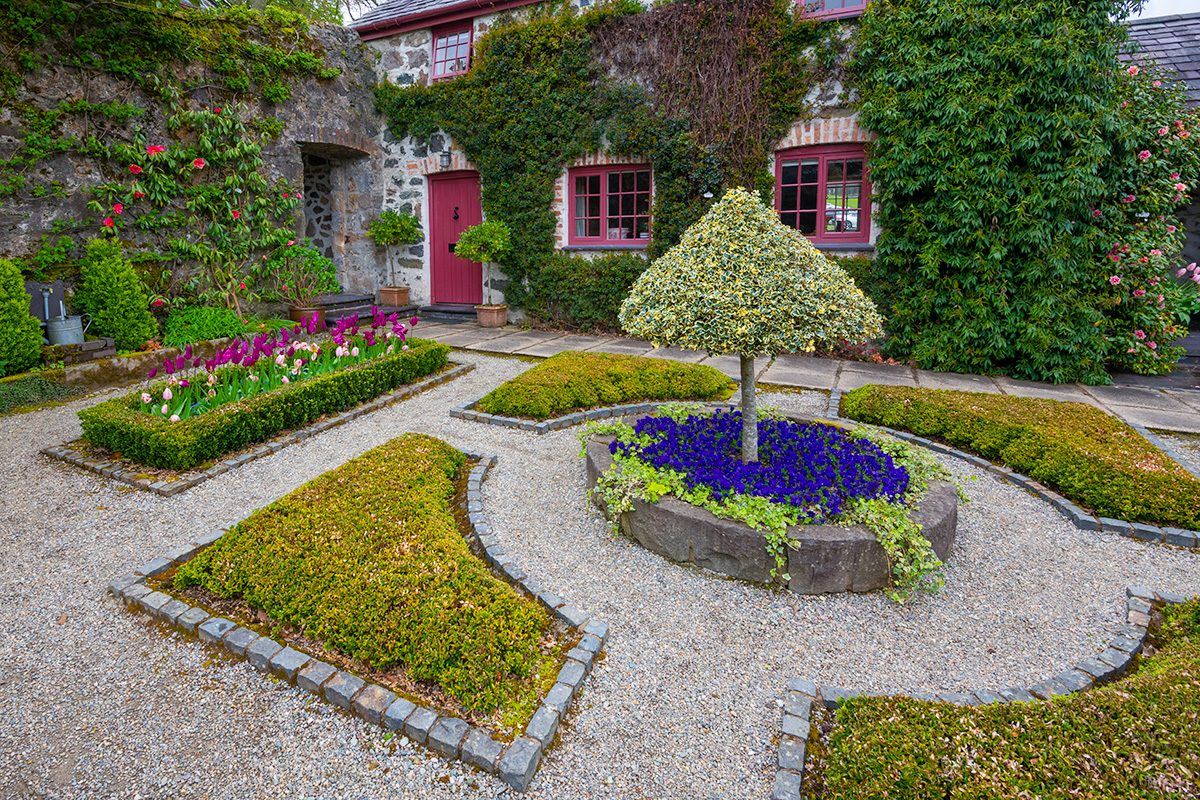
If you're tired of your boring lawn, try a mulch backyard instead of a grass one! If mulch isn't your speed, we've got other options too.
Grass backyards may be the most common option but they’re far from the only one out there. If you want to save money on watering, don’t have the right set up for grass to flourish, or would prefer to be more eco-friendly, there are a plethora of options out there for you to try. Why not consider a mulch backyard instead of grass? Or a ground cover like moss or clover? You could even opt for a colorful outdoor space with flowers. No matter what kind of space, budget, or time considerations you have, you can find an alternative here that will work well for your home.
Just like when picking the type of grass you want, you’ll have to take several factors into consideration. What’s your typical climate? How much sun and shade does your yard get? Is your backyard a high traffic area? And how much time and money are you willing to spend maintaining your yard? However, there are both high and low maintenance options out there for you. So rest assured, if you want to replace your grass, you absolutely can.
1/9
MATT_BENOIT/GETTY IMAGES
Mulch Backyard
If you’re looking for lawn alternatives, why not a mulch backyard instead of a grass one? Mulch comes in a variety of materials, which allows for creative landscape designs using different textures and colors. It provides additional benefits as one of the alternatives to grass lawns such as moisture retention, weed control, protection against erosion, heat retention and protection of root systems.
If you’re landscaping your yard with features such as flower or rock gardens, mulch is ideal for creating pathways throughout the yard. There are several types of much,including wood chips, shredded bark, sawdust, pine needles and straw mulch. However, remember to replace the mulch on time.
2/9
BOY_ANUPONG/GETTY IMAGES
Synthetic Grass Backyard
Synthetic grass, also known as artificial grass or turf, is viable as an alternative to grass lawns. The material has the same look and texture as natural grass. There are three main types worth considering: nylon, polyethylene and polypropylene. The amount of traffic the lawn receives will help determine the type of material best suited for your home. Polyethylene is soft, vibrant in color and resilient. Nylon is strong, allowing it to maintain its shape, and can withstand high temperatures. Polypropylene, while less costly, does not have the durability or resilience of the other two.
3/9
GANNA ZELINSKA/GETTY IMAGES
Gravel Backyard
If you’re intrigued by the idea of a mulch backyard instead of grass, but want an option that is less likely to attract bugs, consider landscaping gravel. There is a wide range of stone types to choose from such as crushed granite, stone pebbles, river rocks, decomposed granite, pea gravel.
Granite offers many advantages as a grass alternative including a wide variety of color and texture options, broad availability, a wide price range-perfect for any budget and durability. Stone-based materials do not attract bugs, don’t decompose due to the elements, and are long-lasting. One thing to consider however, is that over time, gravel will start to sink into the soil.
4/9
CEZARY ZAREBSKI PHOTOGRPAHY/GETTY IMAGES
Clover Backyard
We’re not talking about the clover that’s taking over your lawn, we’re talking about a larger flowering variety that is far more at home in your garden. While you may have to protect it from hungry creatures, bees will love it. Just remember to plant it more like grass and treat it like a ground cover as an alternative to a lawn.
5/9
BJDLZX/GETTY IMAGES
Lily Turf
Lily Turf grows well in full sunlight or deep shade in moderate regions and partial shade in regions with extreme heat and cold winters. It thrives in USDA Zones 6-10. The slow-spreading ground cover blooms in late summer with purple or white flowers. Lily Turf prefers slightly acidic, well-drained soil. Once the root system is established, the plant is drought tolerant. During the late winter or early spring months, Lily Turf can be sheared or mowed, which strengthens the plant for new growth and is a nice alternative to a traditional lawn.
6/9
WIRA SINGHAKOMIN/GETTY IMAGES
Moss
Moss as a ground cover is the perfect solution for shady lawns as well as lawns with poor soil. The two key ingredients for growing moss are moisture, a two-minute watering daily, and daylight, but not direct sun. For yards that are heavily shaded, moss is both practical—needs no mowing—and provides aesthetic value. Moss does not produce flowers, seeds or establish true roots. It is a cover-like mat of stems and leaves, which absorbs nutrients and water. Moss grows very well with other perennials that thrive in the shade such as hostas, trilliums and ferns.
7/9
HOTOS BY R A KEARTON/GETTY IMAGES
Flower and Shrub Beds
If you like the idea of a mulch backyard instead of grass, but want to keep some plant life around as well, you can split the difference with flower and shrub beds. This combination adds a touch of interest and beauty to the landscape while reducing soil erosion and the amount of time needed for maintaining a grassy lawn.
Generally, the types of plants used range in various heights of around 1 ft., or less. Taller flowers and shrubs can be used, as well, as a backdrop to the shorter plants. Flower beds, built-in planters and alongside sidewalks are a few suggestions when laying out a landscaping plan. For pathways throughout the yard, use one of the suggestions in this slideshow such as mulch, rocks or gravel to cover the area.
8/9
BYJENG/GETTY IMAGES
Garden Meadow
Visions of flowers blooming and gently bending in the breeze evoke an atmosphere of peace and serenity. This scene can be yours with a colorful garden meadow. There are two types: perennial and annual. Perennial meadows blossom from year to year and annual meadows produce once per year. Both are excellent alternatives to grass and put on a display of color for many months. Planting is recommended in mid-spring or early autumn in sunny areas. While annual meadows need a rich soil base, perennial meadows do well in poor soil. Wildflowers are available as a mixture of assorted seeds or as individual plants.
9/9
VOLOKHATIUK/GETTY IMAGES
Outdoor Garden Features
Create an oasis in the front or backyard and eliminate the need for grass by designing a landscape that uses mostly hardscape features, such as a deck, patio, koi pond, water features, an outdoor kitchen or a fire pit.
For pathways, use one of the mentioned low-maintenance ground covers such as moss, gravel, synthetic grass or mulch. You can add in a touch of greenery by planting bordering flower beds alongside the pathways, designating an area for a vegetable or flower garden, and highlighting areas around decks, ponds or patios with drought-resistant and ornamental grasses.
We are no longer supporting IE (Internet Explorer) as we strive to provide site experiences for browsers that support new web standards and security practices.