


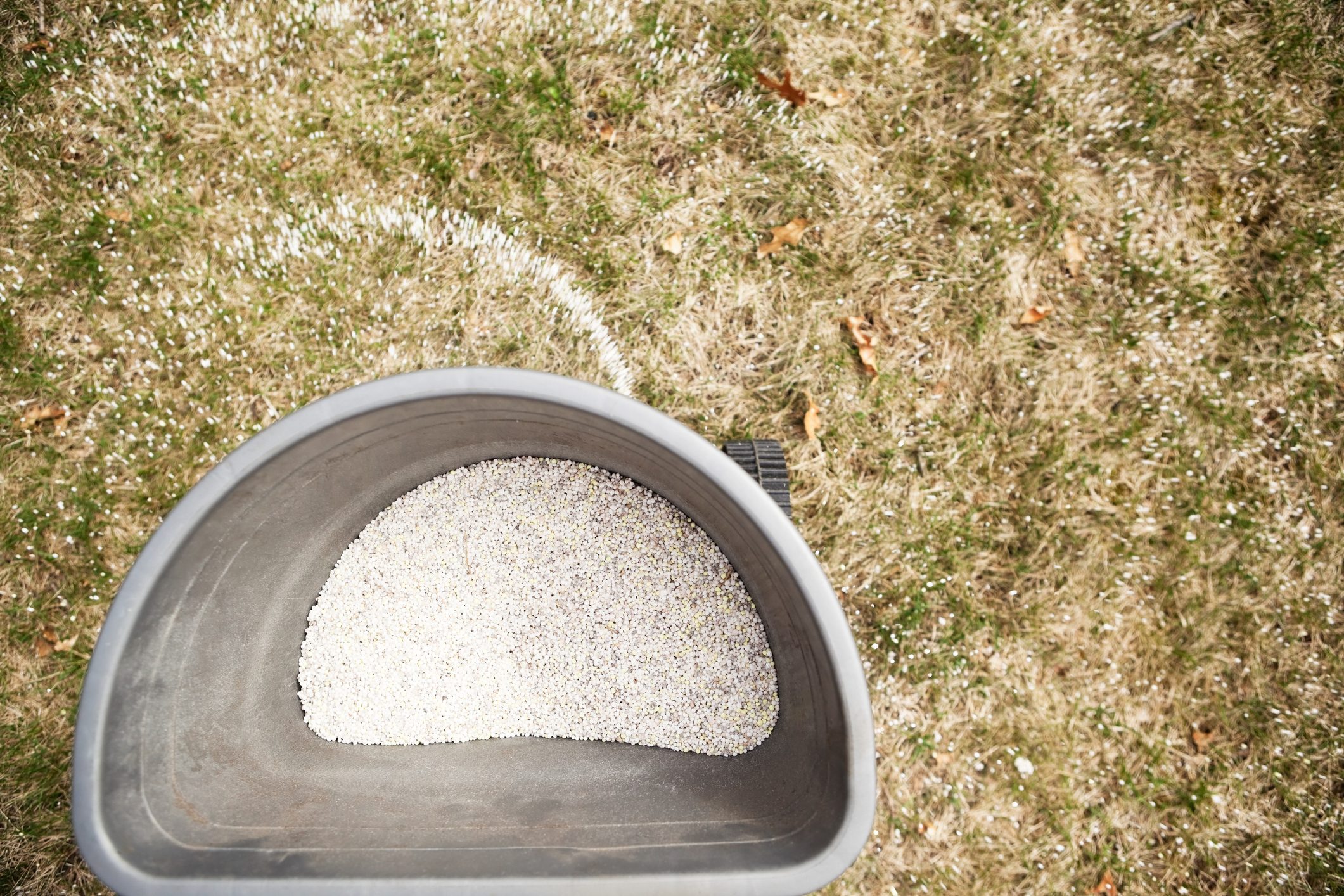
Homeowners often lose interest in lawn care when summer wanes. Here's why you shouldn't skip that last fertilizer application of the season this fall.
The fall season is all about pumpkin spice, Halloween decor, and dealing with leaf clean up. So it’s easy to think that once the weather turns cooler, you’re done with lawn care for the year. Surely you don’t need to fertilize your grass in the fall, right? Wrong.
“You should feed your lawn between September and November, to help it recover from any heat stress that it went through and also prepare it for winter,” says lawn care expert Angelika Zaber. In fact, your final fertilizer application of the year is the most important one! Let’s find out why.
On This Page
Why Fertilize the Lawn in Fall?
Like the rest of us, your lawn gets tired by the time summer ends.
Your lawn has struggled through a long, hot relentless summer. It’s endured excessive heat, humidity and drought. It’s been trampled by kids, dogs and overuse. Weeds, insects and diseases have taken their toll. Your lawn is hungry and tired. It wants a good meal before it settles in for a long, well-deserved winter slumber.
So why fertilize your lawn in the fall?
- This is your lawn’s last chance to thicken up, restoring turf density back to its early summer form.
- Fall fertilizer helps regenerate roots lost by hot, humid or dry summer weather.
- Fall fertilizing fortifies your lawn so it can better combat severe winter conditions that lie ahead.
- A good feeding fills up your lawn’s gas tank before going dormant. That way it has plenty of energy stored for a healthy start next spring.
When To Fertilizer Your Lawn in the Fall
The best time to apply your last fertilizer application is between August 15 and October 1. Ideally, your last lawn feeding should take place six to eight weeks before the average first frost in your area. So, if this date is Oct 10, like it is in Minneapolis/St. Paul, you should target August 15 to September 1 as your last application. If you live in Des Moines where the average first hard frost is October 27, then you’d want to target your last fertilizer application six to eight weeks earlier, or between September 1 and Sept 15.
Planning fall fertilizer applications around average frost dates gives your lawn plenty of time to absorb all of the nutrients before it enters its dormant stage. There’s no need or benefit to carry over nutrients through the winter.
If you apply fertilizer too late, you’re making your lawn stay up past its bedtime when all it wants to do is go to sleep for the year. Late fertilizing of cool-season lawn grasses will keep it actively growing when frigid weather, snow and ice usher in winter, potentially causing winter kill and disease issues next spring.
What Fertilizer To Use in the Fall
The answer here depends on local ordinances or state laws. Some states do not allow the use of lawn fertilizers that contain phosphorus (the middle number*). Even though phosphorus is critical for root growth during seed and sod establishment and in the fall to assist in root redevelopment, many soils naturally contain phosphorus so it’s not necessary to apply more.
If you live in a phosphorus-free community, use fertilizers containing readily available nitrogen sources (the first number) and a fertilizer higher in potassium (the third number). This will properly feed your lawn going into winter. Good numbers would be 24-0-12 or 21-0-21.
If you live in a municipality or state where fertilizers containing phosphorus are allowed, this can add another layer of plant health protection to prepare your lawn for a harsh winter. A good example would be 24-5-10 or 20-5-20. A lawn starter fertilizer, such as a 14-14-14 or 12-24-12 would also work.
Liquid or soluble fertilizers containing similar NPK ratios can also be used. However, understand that recommended application rates of sprayable lawn fertilizers will deliver fewer nutrients per application compared to granular products. But, using a hose-end sprayer to apply a fall fertilizer is still an acceptable method of application. You may have to apply two applications a couple of weeks apart to realize its full benefit.
*Fertilizers come with an NPK number. N for nitrogen, that encourages green, leafy growth; P for phosphorus, which contributes to root development; and K for potassium, that helps maintain vigorous growth.
How to Fertilize Your Lawn in the Fall
Approach your fall fertilizer application just as you would any other.
Follow the coverage recommendation for the chosen product. It’s always a good idea to split the application in half and then make two passes in different directions. For example: if your fall fertilizer bag says it will cover 5,000 square feet, find the setting on your spreader for 10,000 square feet (5,000 x 2). This will close the spreader gate allowing only one-half the recommended rate to flow through. Then make two consecutive passes at this spreader setting. This will apply the total recommended amount using two passes instead of one. This ensures even, uniform coverage, reducing the risk of missing parts of your lawn.
After you’ve finished your fall fertilizer application, make sure you thoroughly wash your spreader. This removes any remaining fertilizer residue that can corrode spreader components over the winter. Refer to your owner’s manual for additional recommended maintenance before winter storage.
FAQs
How often should I fertilize my lawn?
Fertilize your grass two to three times a year for a beautiful, healthy lawn. “The first fertilization is best done from March to April, to help your grass recover after winter,” says Zaber. “It is worth doing so again just before the summer, to prepare your grass for the challenging, hot weather. Lastly, you should feed your lawn between September and November, to help it recover from any heat stress.”
Do I need to fertilize my lawn if it’s healthy?
“While it is not technically needed, a healthy lawn can still benefit from being fertilized as it increases its resistance to weeds and pests. It also improves its density and color,” says Zaber.
About the Expert
- Angelika Zaber is a lawn care specialist and gardening expert at Online Turf. She provides exceptional expertise and advice that encourages both novice and experienced gardeners to have healthy, vibrant outdoor spaces all year round.