


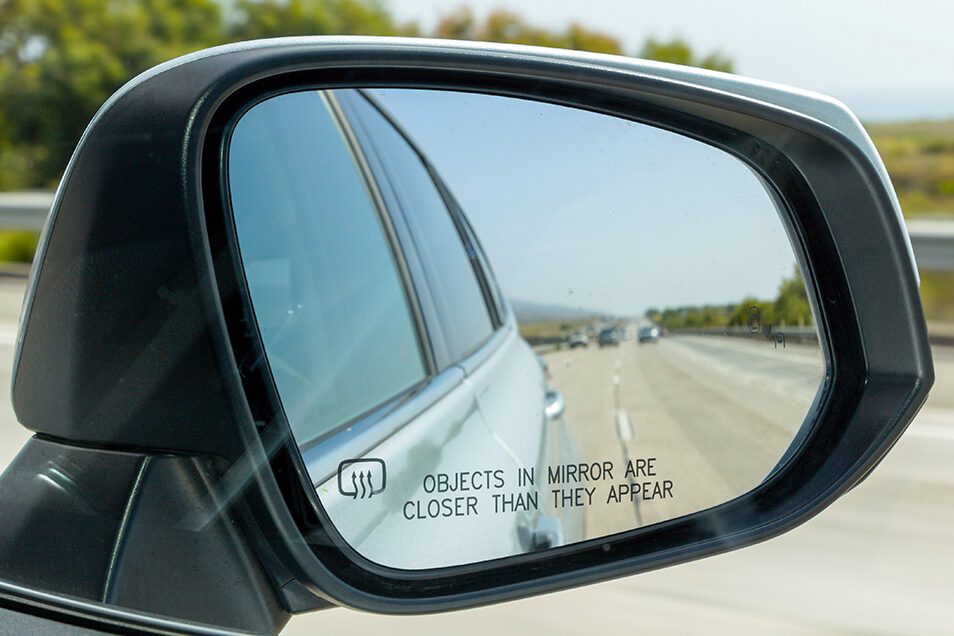
Your sideview mirrors aren't as accurate as you thought. Here's why.
“Objects in mirror are closer than they appear.” It’s a warning that all drivers have read many times. In fact, we’ve all probably read that phrase so many times before that there’s a good chance it’s lost some meaning. What does it really mean that the objects are closer than they appear? How much closer? And how much should drivers really take that into consideration when making decisions on the road?
Here, we’ll examine the science behind why sideview mirrors are less than reliable when it comes to distance and how drivers can best use them.
Why Some Sideview Mirrors Are Unreliable
You might not realize it, but the mirrors on your car’s driver’s side and passenger’s side are distinctly different. The driver’s side mirror is flat, just like the mirror you stare into as you brush your teeth every morning.
But take a glance in a sideview mirror and you can tell it’s not the same as the mirror in your bathroom. The image reflected shows a wide field of view, giving drivers an easily readable look at the road directly to their sides.
This image is created because passenger sideview mirrors in the United States are “convex.” Convex mirrors are curved outward, creating a wide image with some serious accuracy caveats. The wide view comes with the tradeoff of distorted distances— namely, objects appear further away than they are in reality.
How Much Closer Are Objects Than They Appear?
How far off are convex sideview mirrors, though? And is the difference enough that drivers should think about it while they’re driving?
In short: yes. Driving safety experts recommend that you use your sideview mirrors as a reference, giving you a good idea of what’s happening behind you. But you should never use them as if they are 100 percent true to life. Merging because you think a lane is empty based on what you can see in your passenger side rearview mirror could easily lead to a collision.
Instead, always check your surroundings by physically turning your head and looking when you need to switch lanes, turn onto a side road, or pull away from a curb.
Source
California Driver’s Handbook “Section 8: Safe Driving” 2025
Related
- Do You Know What That Little Button on Your Seat Belt Is For?
- What Those Lines on Your Backup Camera Really Tell You
- Here’s What The Small Panel On Your Car’s Front Bumper Is For


