


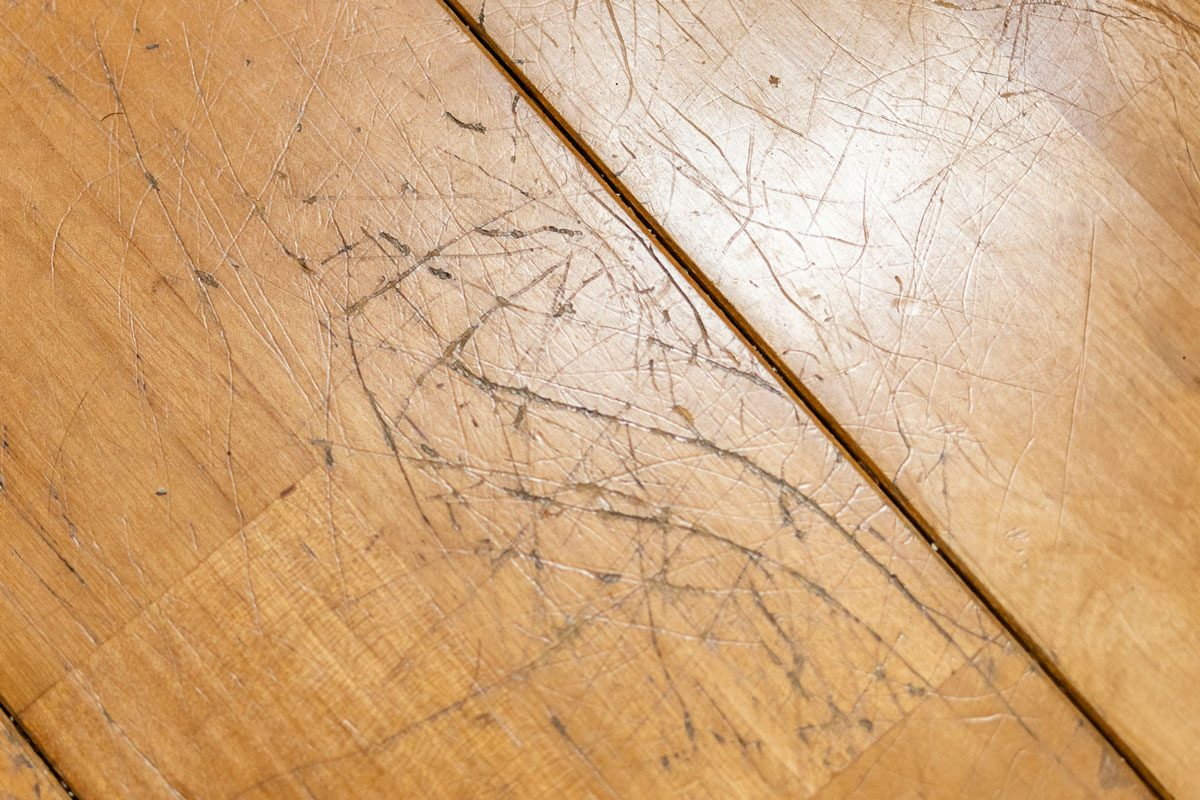
Hardwood floors are beautiful but scratch easily. Here's how to prevent damage and keep them looking great for years to come.
Welcome to Family Handyman’s Guide to Gorgeous Floors, where you can find all the essential tips and tricks for achieving the floors of your dreams and keeping them looking good as new for years to come.
Valued for their warmth and natural beauty, hardwood floors can add significant value to your home, but they can also be a challenge to maintain over time. Debris, dirt from shoes, pet nails and furniture can all cause scratches that accumulate and damage the finish. While hardwood floors can be sanded and refinished multiple times throughout their lifespan, this process is both disruptive and expensive. The best approach is to prevent scratches from happening in the first place. Ahead, discover our top tips for preventing scratches on hardwood floors, with expert advice from Gary Bernard of Holyoke Millwork and Alex Ciosek of Summerlin Flooring.
On This Page
Why Hardwood Is So Easy to Scratch
While the term “hardwood” evokes the idea of strength and durability, “hardwood is softer than you think,” says Bernard. Even the hardest hardwoods can’t compete with the toughness of materials like tile or stone. Wood is made of long cellulose fibers that give it structure and rigidity, but these fibers can also compress and tear easily. Heavy or concentrated pressure, like a high-heeled shoe or dropped object, compresses wood fibers, leaving dents. Sharp objects like dirt particles and pet toenails cut surface fibers, leaving behind scratches and scuffs.
Adding to the issue, today’s hardwood is often softer than older hardwood because the trees are harvested much younger. “When your parents or grandparents bought a home with hardwood floors, it was old-growth maple and oak that had been growing since the Civil War,” Bernard explains. “It was seasoned and had tightly spaced rings, which made it harder. But today, the trees barely get going before they’re chopped down, so the rings are spaced more loosely.”
How to Prevent Scratches on Hardwood Floors
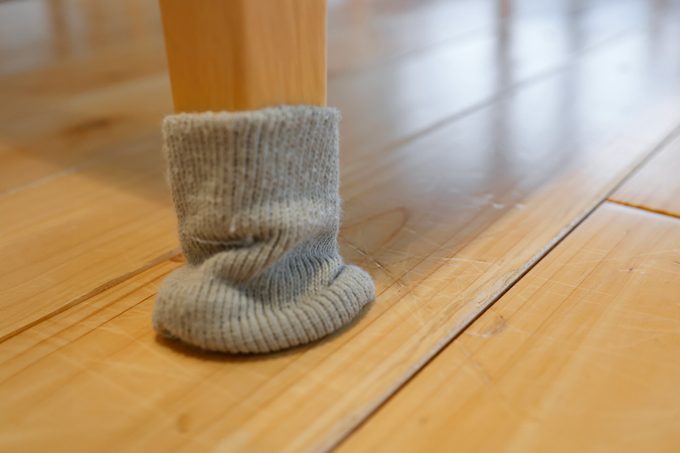
It is possible to take preventive steps to reduce the number of scratches on your hardwood floors.
Use furniture pads
Place felt pads under all furniture legs “on day one,” Bernard says. “Don’t wait until after you’re done moving in. You’ve got to start on the first day for the best protection.”
Lay area rugs
Both experts recommend area rugs in high-traffic areas, especially entryways. They not only catch dirt coming into the home but also protect these areas from scuffs and scratches.
Utilize moving pads
Always use a protective pad under furniture when moving it, even a short distance. “Cardboard or a cloth pad is okay,” Bernard says, “but the best thing to use is a piece of quarter-inch Masonite,” a compressed-wood sheet product contractors use to protect floors during projects.
Trim pet nails
Pets can quickly scratch hardwood floors with their nails, so “keeping their nails trimmed is the best measure,” Ciosek says. Bernard also suggests the addition of rug runners in high traffic pet zones to protect your floors.
Clean regularly
Dirt can cause scratches when dragged under a chair leg or scuffed along by your feet. Ciosek recommends sweeping daily to keep your floor clean of debris to prevent scratches.
FAQ
Do I need to implement a “no shoes” policy to protect my floors from scratches?
A “no shoes” policy may marginally protect your floors from scratches by reducing dirt and debris in the home, but the above methods will more effectively prevent scratches.
Are there certain types of hardwood that are more scratch-resistant than others?
Hardwoods like hard maple, Brazilian cherry and hickory have some of the highest hardness ratings and will be more scratch-resistant than softer woods. In addition, a high-quality, durable finish is key.
What should I do if my hardwood floor already has a scratch?
Take steps to prevent additional scratches, and try filling small scratches with a blending pencil or stain marker to reduce visibility.
How often should I refinish my hardwood floors to maintain their durability?
Plan to refinish hardwood floors every seven to 10 years depending on the level of foot and pet traffic.
About the Experts
- Alex Ciosek is a project estimator at Summerlin Floors in Amherst, Massachusetts.
- Gary Bernard is the 3rd generation owner of Holyoke Millwork, a flooring retailer and installer in Holyoke, Massachusetts.