


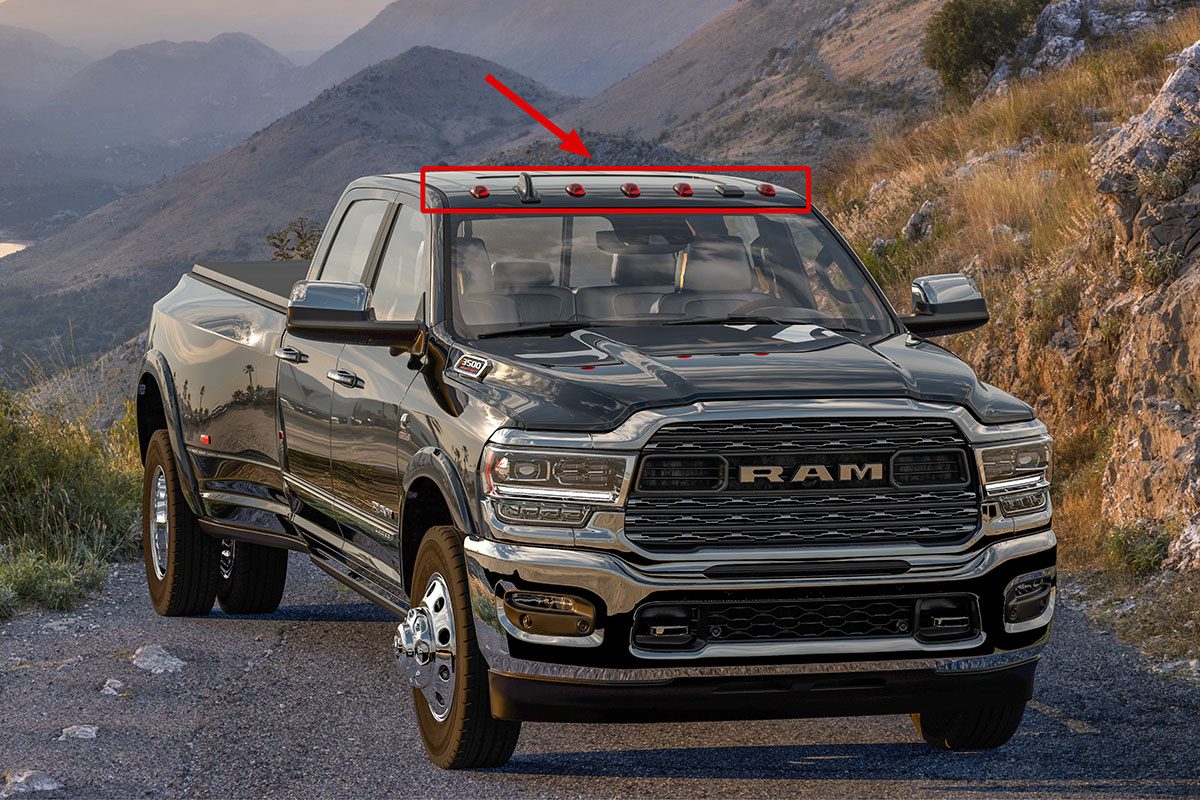
Are those orange lights just for show? Here's what they tell other drivers.
Ever feel like big trucks are becoming incredibly common? The data backs that sentiment up. According to a 2024 Cornell Law School study, 80 percent of new vehicles sold in the United States were classified as light trucks, meaning they weigh anywhere from 4,000 to 10,000 pounds.
And those are trucks on the relatively smaller side, with larger commercial alternatives weighing well over that 10,000-pound mark. With that much mass hurtling down highways, it makes sense that trucks have to be treated a little differently when it comes to safety laws. If you’ve ever noticed a truck with a row of orange or amber lights above its windshield, you’ve seen one of those unique safety rules in action.
Here’s what’s going on with those lights and what it means if you’ve seen them on the road.
What Orange Truck Lights Mean
That trio of orange lights on top of a truck doesn’t provide any added visibility for the person driving the truck. Instead, they’re what’s known as clearance lights, intended to show people outside of the vehicle exactly how large the truck is.
According to the Department of Transportation, commercial vehicles more than 80 inches wide are required to have “three amber front and three red rear identification lamps spaced between 6 and 12 inches apart at the center of the front and rear of the vehicle, as high as practicable.”
This is not exactly a new practice, either. Turns out, the DOT has required cab roof lights on larger trucks since 1989. As heavy-duty trucks have become more popular, those little amber lights become more prevalent.
Are Trucks Getting Bigger?
It’s an open secret that for the majority of consumers in the U.S., bigger is always better. This is as true as it is for televisions as it is for trucks, and it’s a mentality that has incentivized automakers to make trucks as large as their engineers can design. Large trucks have a practical appeal, too, especially if you’re someone looking to do a significant amount of hauling.
There’s also another, more technical incentive for automakers to beef up their trucks. Federal requirements for how fuel-efficient a vehicle has to be are usually based on its physical footprint. So by making a truck bigger, wider and heavier, automakers can then put it in a category with other large trucks and less demanding fuel economy standards.
According to Consumer Reports, the hood height of passenger trucks has increased at least 11 percent on average since 2000. Meanwhile, new pickups also grew 24 percent heavier on average from 2000 to 2018. As trucks continue to simultaneously boom in size and popularity, new safety regulations will likely have to be created to protect smaller vehicles and pedestrians with whom they share the road.
Sources:
Cornell Law School, “The Unchecked Rise of Trucks and SUVs in America” 2024
Consumer Reports, “The Hidden Danger of Big Pickup Trucks” 2024
Federal Motor Carrier Authority Online Filings, “DOT Lighting Requirements for Trucks: What You Need To Know” 2024
RELATED:


