


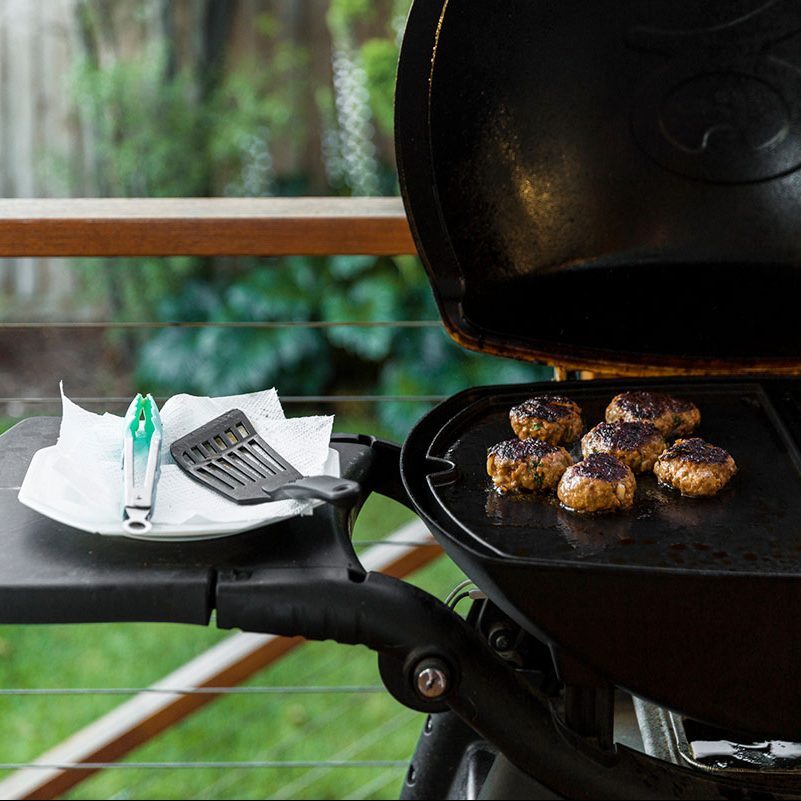
It's grill time! Here's a guide to the most popular and different types of outdoor grills, plus pro tips for successful grilling.
As the weather starts to warm up and the days grow longer, our thoughts turn to grilling. Outdoor living is one of the great joys of summer and hosting a cookout with family and friends just adds to the fun. Whether you’re a homeowner with a new patio to show off, a novice BBQer or an established grill master eager to mix things up, our guide to different types of outdoor grills will help light the way.
Here’s everything you need to know in this outdoor grilling guide—complete with expert tips.
On This Page
Comparing Different Types of Outdoor Grills
The two main types of grills are gas and charcoal, with countless variations in size, style, cooking method and features. Then there are flat-top grills, kamado grills, smart grills and pellet grills, each genre with loyal legions of followers. Here are some of the main features of each:
Charcoal grills
For many of us, a simple, portable charcoal grill served as our introduction to backyard barbecuing. A charcoal grill makes a great entry-level purchase. Basic models are inexpensive and require a bag of charcoal and a lighter to get started.
But it takes a while for charcoal to heat sufficiently for cooking. It can also be challenging to cook food evenly because a field of charcoal features hot and not-as-hot spots.
“Even with a thermometer, you must open vents to cool down the grill or add charcoal and time to increase the heat,” says Ron Shimek, president of Mr. Handyman.
Gas grills
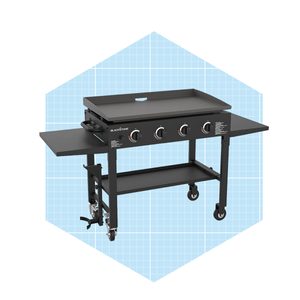
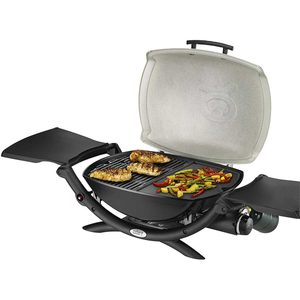
Gas grills achieved near-mythic status in America’s backyards as a sign that the person wielding the spatula and tongs is serious about their grilling game. As the name suggests, gas grills are generally fueled by a propane tank or attached to a home’s natural gas line. A good entry-level grill costs about $200, while prices for premium gas grills with all kinds of extras can soar well into the thousands of dollars.
Flat-top grills
An ancient cooking method that’s enjoying a bit of a renaissance, flat-top grills, priced about $200 and up, have a solid cooking surface, a griddle that’s smooth and flat or has raised ridges. Most outdoor flat-top grills are propane-fueled, although portable electric models can be used indoors and out.
Flat-tops are great for cooking liquid foods like eggs, pancakes and foods that tend to fall apart on a conventional grill, such as fish fillets. However, they don’t give food a smoky taste and are not ideal for fatty and marinated meats.
Kamado grills
Kamado grills are for charcoal grilling connoisseurs who eschew gas grilling. Based on an ancient Asian cooking style, egg-shaped kamado grills are made with a ceramic shell and interior that retain heat and impart food with a smoky flavor. The consensus is that 100 percent natural, untreated lump charcoal is the only product to use with a kamado. It’s a good idea to invest in some accessories, too, like a Joetisserie, which will take your grilling to the next level.
Pellet grills
A relatively recent addition to the backyard cooking scene, pellet grills are fueled by food-grade wood pellets. They are easy to use, even for a novice griller. Because the heat source is completely covered, they won’t extinguish in wind or rain. Most pellet grills function as BBQ grills and smokers.
Portable grills for tailgating and travel
Portable grills are great for convenient transport and quick set-up, making them a wise choice for anyone short on space or frequently cooking outdoors away from home. These grills are typically compact and lightweight, with models available in both gas and charcoal versions. They’re ideal for small batches of food and casual cookouts. Many feature foldable legs, handles and latches for hassle-free carrying and storage. While they don’t offer as much cooking space as full-size models, they deliver solid performance for simple meals and spontaneous grilling sessions.
Factors to Consider When Buying an Outdoor Grill
The debate over whether gas, charcoal or other types of outdoor grills are better runs as hot as some sports rivalries. Here are some points to consider:
Space. “Grills come in various sizes but gas grills can only get so small, whereas a charcoal grill can be small enough and light enough to pick up with one hand,” Shimek says. “That’s because a certain number of components are needed to deliver the gas with a steady flow to keep the grill’s fire burning.” Pellet grills tend to be bulky as well. With a compact charcoal grill, you only need room for a five-pound bag of charcoal. Small kamado grills are compact but still heavy, easily weighing 60 pounds or more.
Budget. If you’re on a budget, a charcoal grill is the cheapest solution, although gas grills come in low-end models. “The higher the heat capabilities and the more accessories they come with, the higher the price tag,” says Shimek. “Of course, more bells and whistles increase the chance of your grill needing repair down the line.” Kamado grills and pellet grills cost around $300 and up.
Ease of Use. For simple outdoor cooking, it doesn’t get much easier than gas or pellets. Both are simple to ignite, maintain steady heat and don’t require much cooking adjustment. With charcoal, even heating is a challenge, plus charcoal takes longer to heat to cooking temperature.
Flavor. For the gas vs. charcoal/pellet debate, the question for many comes down to flavor. Charcoal grills, pellet grills and smokers impart more of a woody, smoky taste that many BBQ lovers crave. Gas grilling is excellent for searing proteins and sealing in juices, as well as for rapid grilling, but doesn’t lend the same smoky flavor.
Outdoor Grill Tools and Utensils

While a grilling aficionado can go nuts with accessories and tools, a few are essential to the basic grilling set-up:
- Long tongs, for turning food on the grill and spreading coals;
- Heat-resistant gloves, especially if you’re cooking at high temps and/or for a long time;
- Wire brush for clean up;
- Long flat spatula, for turning items like fish that might fall apart easily;
- A meat thermometer for checking internal temperatures.
Tips and Techniques for Using Your Grill
Here are some expert grilling tips and techniques from Rick Moonen, master development chef for Perry’s Restaurants:
- Create zones when grilling with charcoal. “The usual configuration for my grill bed is hot coals on one half of the grill surface and a good cover for the grill,” says Moonen. “By doing this, you are creating hot and cooler cooking zones, which gives you control over the searing and cooking process and helps prevent burning the heck out of your protein.” This same principle can apply to a gas grill, as long as you can shut off the burners. Gas grills are subject to flare-ups and keeping a cooler zone on the grill means you can move food out of the direct flame when one occurs.
- Create oxygen flow when grilling with charcoal. “When cooking with live fuel, the temperature control is oxygen flow,” says Moonen. “The more oxygen you allow to flow into and out of the cooking area, the hotter the coals will remain until they turn to ash. The air intake is from the lid and the exit is often under or to the side of the coals. Opening and closing these vents control the cooking temperature.”
Moonen’s tips to keep food from sticking:
- Allow the food to come to room temperature for half an hour before introducing it to the hot grill surface.
- Coat the seasoned protein with oil and place it on the grill. If it is thin and will cook quickly, it goes on the hottest part of the grill.
- Let thicker cuts remain over the hot zone only for enough time to ensure a good sear, then move them to the cooler zone and cover.
- Keep fish from sticking by coating it with a fatty dressing, like seasoned mayonnaise.
- Use a perforated grilling pan for smaller items such as cut vegetables or thin asparagus.
Bonus Tip: A grill caddy is handy for keeping all your essentials in one place, so you don’t have to keep running inside whenever you need something.
Outdoor Grill Maintenance
“One of the greatest things about grilling is that maintenance is minimal,” says Moonen. “A grill must always be preheated to a hot temperature that will burn off the previous-use leftovers.”
Moonen covers the grill and allows it to cool down slowly when he is finished cooking. “It becomes a self-cleaning oven this way,” he says. He recommends doing just two things between burns: removing all ashes and cleaning the grill with a stiff-bristled brush.
Gas grills, Shimek says, are similarly easy to clean. “You need to remove grease buildup, scrub the grilling grates and keep the exterior looking good,” he says, “but it’s a fairly simple process.”
FAQ
What type of grill is easiest for beginners?
Gas grills are the easiest to use. They start quickly, heat up fast, and are simple to clean. The simple mechanism also makes them the safest of all grills. So, if you are a newbie in the field, you can try gas grills.
About the Experts
- Ron Shimek is the President of Mr. Handyman, a leading appliance repair and maintenance company with extensive experience in the appliance industry. He also provides valuable insights into grill maintenance and usage.
- Rick Moonen is the Master Development Chef for Perry’s Restaurants. He is famous for his commendable expertise in grilling techniques and also shares valuable tips to enhance outdoor cooking experiences.
Sources:
- Barbecue Bible: “6 Types of Grills and Why You Need Each One”
- The New York Times Wirecutter: “The Best Gas Grill”
- Perry’s Restaurant: “About Rick Moonen”
- Mr. Appliance: “About Ron Shimek”
- Traeger: “Traeger Pro 575”