


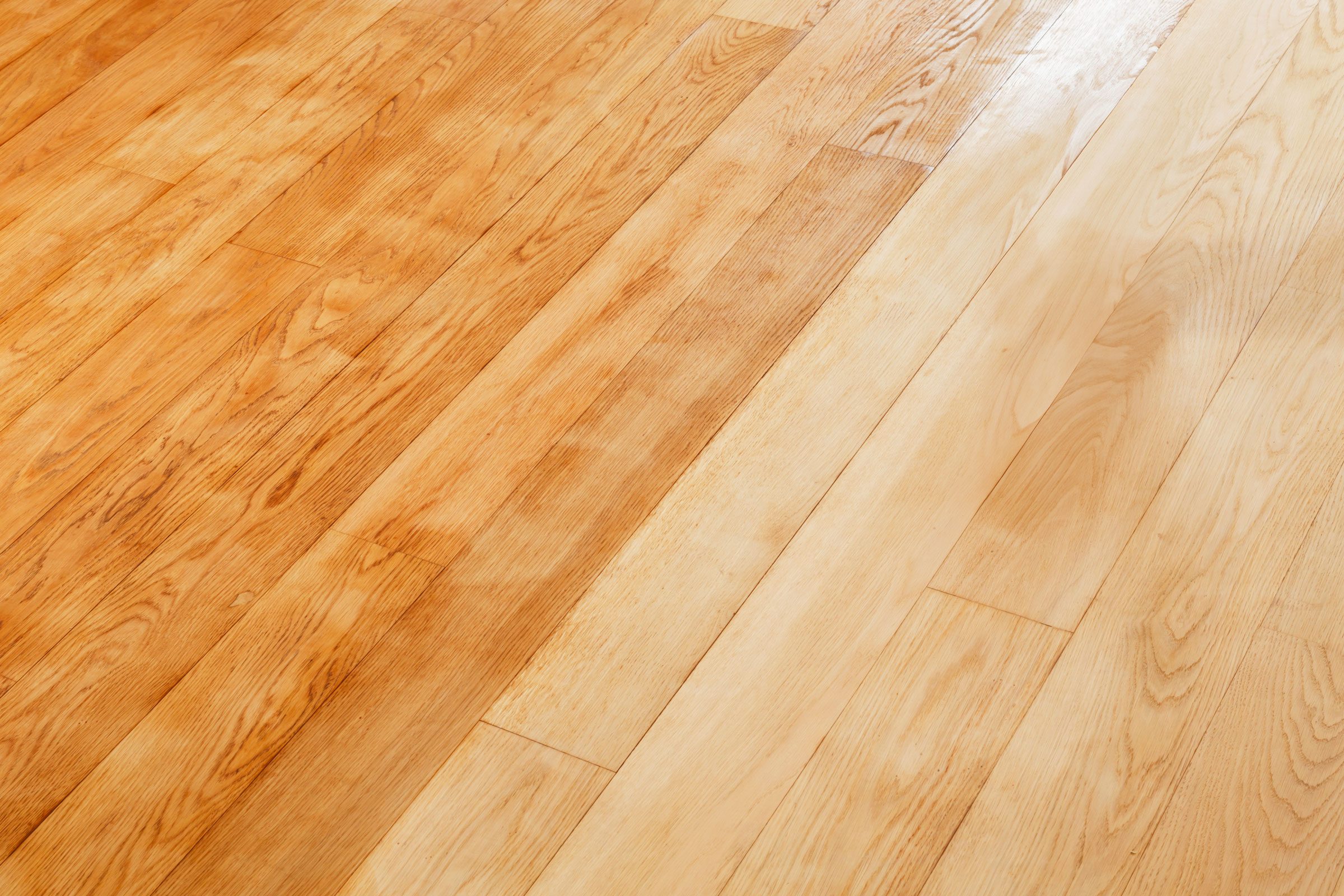
Our experts explain how to lighten stained wood so that even the dingiest, darkest wood can be made lighter and brighter.
Our editors and experts handpick every product we feature. We may earn a commission from your purchases.Learn more.

Our experts explain how to lighten stained wood so that even the dingiest, darkest wood can be made lighter and brighter.
Our editors and experts handpick every product we feature. We may earn a commission from your purchases.Learn more.
More homeowners are opting for a lighter look in their wood finishes. DeDe Bailey, a DIY home interior specialist at Designed Decor, says she’s seeing a shift to lighter wood tones in flooring, doors and trim, primarily in new home builds. If you’re an existing homeowner looking to lighten your interior wood, Bailey says you don’t have to miss out. “The trend in new home design carries over to the DIY homeowner wanting to change their dark stained trim and doors to a subtle softer finish as well,” she says.
Whether you’re interested in brightening up your interior trim, making your wood doors warmer or tackling the refinishing wood at home for your furniture, understanding how to lighten stained wood can transform your interiors.
While it’s natural to think of stained and sealed wood as having a permanent color, engineer and woodworker Leo Watts assures us it can still be modified. “Lightening interior trim or doors is a process I’ve done many times,” says Watts.
While understanding wood types, grains and finish effects plays into effective wood lightening, he says the basic process doesn’t have to be complicated.
On This Page
Beyond aesthetics, lightening stained wood can have practical advantages. It can make a room feel larger and brighter, especially if the existing dark stain absorbs a lot of natural light.
For furniture, refinishing wood at home can be a cost-effective way to update pieces to match new decor or to restore old items, revealing their natural beauty. It can also be necessary if a previous staining job was poorly done or the wood has darkened unevenly over time.
The most common reason for wanting to lighten dark wood stains is to update the style of a home or piece of furniture. Trends shift—what was once a rich, desirable dark walnut or mahogany finish might now feel dated or heavy. Lightening wood can align with more contemporary styles like modern Scandinavian design, favoring lighter natural wood tones or a farmhouse aesthetic.
The first thing you need to do is understand the different staining methods and figure which one would work best for you.
Wood stains are designed to penetrate the fibers to impart color, but pigment-based stains have larger color particles that sit more on the surface and in the wood pores, while dye-based stains have smaller particles that penetrate deeper. “The easiest way for a DIY homeowner to change over their dark stained trim and doors is through paint,” says Bailey. Traditional paint can be applied to finished wood with only a light sanding. But Bailey says paint can also be diluted, creating a paint wash. “Paint wash allows the wood grain to show through, and gives the dark stained wood a lighter finish,” she says. The type of stain, the type of wood and its porosity all affect how deeply the color is absorbed and, consequently, how it will react to lightening methods. Older oil-based stains can be particularly stubborn. Before attempting to lighten stained wood, it’s useful to know that some methods remove the stain while others chemically alter its color.
Depending on the chosen method, you may need:
Working with chemical strippers, wood bleaches and even wood dust requires proper safety gear:
Paint is a good choice to lighten a wood finish without using chemical solvents. Another option that minimizes chemicals? Steel wool. This technique can work on wood with a thin top coat of sealer, or a top coat that can be removed with a gentle chemical stripper.
To lighten wood using steel wool:
If the steel wool technique sounds too involved and you don’t mind adding another chemical treatment into the mix, wood bleach is a popular solution. “There are many popular brands that now offer these products to easily lighten your home’s interior trim,” says Bailey.
To use a chemical wood bleach:
For DIY wood bleaching, consider the following:
All these techniques have one thing in common—wearing away some of the top layer of sealant, stain and sometimes the wood itself. To return the wood trim or furniture to full resilience, cover them with a topcoat of sealer.
You can use a water-based poly over almost any stain or paint wash after it’s dry. Typically, this should only take a few hours, but sometimes drying takes a little longer. I’ve seen some finished wood require a full 24 hours before drying enough to take a sealer coat.
Combine all these steps, and you can lighten wood even on large-scale projects. Watts shared his experience on one such effort, transforming a 1920s bungalow with a houseful of dark wood trim into a more modern and lighter environment.
“We aimed to brighten without compromising original design integrity,” Watts says.
Here’s how it went:
“After stripping finishes, we carefully worked the intricate trims, using proper safety gear for the potent chemicals,” Watts says. “Plastic scrapers removed old finish along the wood grain to avoid damage. Bleach then further lightened the wood. Applying evenly is key for consistent results. We neutralized with vinegar/water, wiping away residue.”
“Overnight drying lets us properly evaluate in natural light and ensure moisture evaporation. Sanding prepped for the polyurethane finish to seal and protect the lightened wood, enhancing its natural beauty.”
How to fix blotchy or uneven lightening: Bleach absorption varies due to sanding inconsistencies, residual finish or wood characteristics.
Dealing with over-bleaching or discoloration: For excessively pale or off-color wood, apply a subtle warm-toned dye wash or mix toner into the initial clear coat. Always sample first!
Sanding (with proper dust protection) or using a paint wash are options for minimal chemical exposure. If using chemical wood bleaches, the process described in wood science literature involving household chlorine bleach is generally safer regarding wood damage and user handling than some high-strength commercial acidic bleaches, though it works more slowly. Regardless of the chemical chosen, strict adherence to safety precautions (gloves, goggles, respirator, ventilation) and manufacturer instructions is paramount.
If your wood is blotchy, first ensure all bleach residue is neutralized and rinsed and the wood is dry. You can try a very light, targeted reapplication of diluted bleach to darker spots or gentle sanding to even out the tone. Sometimes, a pre-stain wood conditioner (if you plan to apply a new light stain) or a wash coat/toner before the final clear finish can help blend uneven areas. The key to avoiding blotchiness is meticulous preparation and even application of the bleach.

