


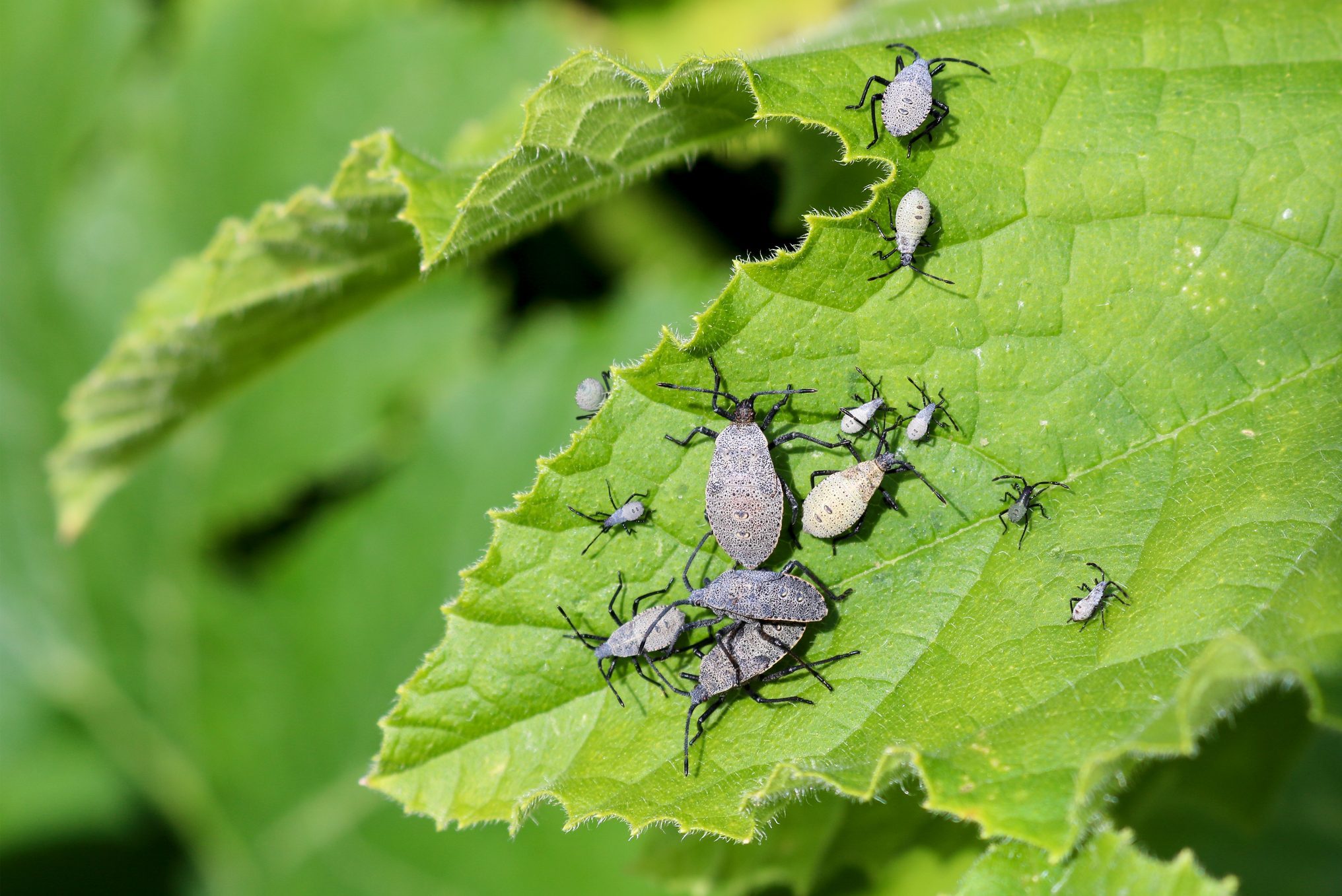
If you're a gourd grower, here's how to prevent squash bugs from invading your garden so they don't ruin your prize pumpkins or cucumbers.
Never heard of a squash bug? That’s understandable. Although well-known to farmers and avid backyard gardeners, unless you’ve cultivated cucurbits (gourds) like squash, zucchini, pumpkins, cucumbers, melon, etc., you may not have encountered this bug.
Here’s what you need to know about squash bugs, how to prevent them from invading your garden and what to do if they’re already there.
On This Page
What Are Squash Bugs?
Defined as a true bug, squash bugs (anasa tristis) are insects with hypodermic-needle-like mouth parts that suck the life out of young, tender plants by extracting subsurface fluids.
Looking somewhat like a stink bug, squash bugs measure around 5/8-inches long. They’re dark gray to dark brownish-gray with orange and brown stripes on their abdomens.
Their tiny, oval-shaped eggs are typically copper or bronze, about 1/16-inch long. Eggs hatch in about 10 days, with nymphs going through five stages of growth. They reach full maturity in four to six weeks.
Young nymphs start out with light green bodies with black heads and legs. As they grow, they turn light gray and finally to a brownish-gray.
How Do Squash Bugs Damage Yards and Gardens?
Squash bugs are generally found in gardens where there are many varieties of the cucurbit plants. They love to eat plant tissues. It can be the leaves or the fruits. These problematic pests are capable of laying tons of tiny eggs on the undersides of leaves. If left unchecked, they could kill your plants and transmit Cucurbit Yellow Vine Disease (CYVD). This is a bacterium that, according to the U.S. Department of Agriculture (USDA), could result in serious losses to susceptible cucurbit crops. Early detection is critical.
According to VTechWorks, “The squash bug is a serious insect pest of summer squash across the United States. Squash bugs inflict damage by feeding on plant leaves, stems and fruits, leading to significant reductions in fruit yield and overall economic losses for growers.”
Signs of Squash Bug Infestations: Use Natural Squash Bug Repellents Early
Squash bugs can live through the colder months (overwinter) in plant debris, around foundations and under rocks. They become adults in spring when they begin heavy feeding. They break apart plant tissues, disrupt the water flow, and essentially drain nutrients from a plant’s sap. If not dealt with in a timely manner, your harvest could be ruined.
Signs you have squash bugs include:
- Sightings of actual squash adults, nymphs or egg clusters in the yard
- Small, yellow lesions on leaves, stems and vines that may turn darker over time
- Leaf edges that have a burnt-like, crispy appearance
- Wilted stalks and leaves, even though the plants have been regularly watered
- Dead plants
You should use natural squash bug repellents early to save your plants. Always clean your yard or garden because it is important to maintain your trees’ health as well as to prevent bug invasion. You can use diatomaceous earth or neem oil as pest deterrents.
DIY and Sustainable Garden Pest Control Solutions
It can be a challenge to combat squash bugs. Here are some DIY and sustainable garden pest control solutions:
- Scrape eggs stuck to the underside and stem of leaves and smash them so they don’t hatch into nymphs.
- If you see nymphs, pick them off plants ASAP, because adult squash bugs are much harder to kill.
- Introduce parasitoid insects like the tachinid fly, which lay their eggs around the thoraxes of squash bugs. When the fly eggs hatch, the larvae burrow into the squash bug’s body and slowly kill it.
- Insecticides available to home gardeners are generally not effective against adult bugs. However, targeting immature nymphs has shown some success.
Caution: If using a pesticide, be sure the vegetables you’re treating are listed on the product label.
How To Prevent Squash Bugs
If you are looking for how to prevent squash bugs in your garden, you should follow a combination of cultural, mechanical, biological and chemical techniques. As reported by Jeffrey Hahn and Suzanne Wold-Burkness of the College of Food, Agricultural and Natural Resource Sciences at University of Minnesota Extension, here are the best ways to protect your cucurbit plants from squash bugs:
- Keep your plants healthy (fertilize properly and water regularly).
- Plant early to cultivate larger plants, which tend to be hardier and more resilient against squash bugs.
- During the growing season, remove debris to eliminate places for squash bugs to hide.
- Clean up cucurbit plant matter in the fall to reduce the number of squash bugs that will hang around over the winter.
Other non-chemical, biodiverse-centered approaches:
- Engage in companion planting, a method that uses other plants as pest deterrents. Radishes, nasturtiums, marigolds, bee balm and catnip do a good job repelling squash bugs.
- Use floating row covers to create a barrier that prevents bugs from feeding and laying eggs on your plants.
Pro tip: One of the best squash bug prevention tips is that floating row covers should be removed when flowers begin to form so pollinators can access the blooms.
What To Do When Squash Bugs Invade
Squash bugs (Anasa tristis) can easily invade your garden and damage your cucurbit crops. It can be melons, cucumbers or pumpkins. Regular monitoring is key. If you see egg masses, remove those promptly. Always sanitize your garden and remove the debris. Sometimes pests can be attracted to debris and spread to your trees.
There is a unique technique called trap cropping. If you plant a special plant in your garden that can attract pests, then other plants will not get harmed by them. You can plant Blue Hubbard squash in a secluded place in your garden and execute this technique.
About the Experts
- Marissa Schuh is an Extension educator with the University of Minnesota. She specializes in integrated pest management for fruit and vegetable crops.
- Jeffrey Hahn was an Extension entomologist. He is now retired. His field was insect identification and pest control.
- Suzanne Wold-Burkness is a researcher at the College of Food, Agricultural and Natural Resource Sciences. Her area of study is on insect monitoring and field studies to support sustainable agriculture.
Sources:
- University of Minnesota: “Squash bugs”
- VTechWorks: “Integrated pest management of squash bug, Anasa tristis, for conventional and organic cucurbit systems in Virginia”
- Lincoln University: “Trap Cropping to Control Cucumber Beetles and Squash Bugs in Cucurbit Crops”
- University of Missouri: “Trap cropping: A simple, effective, and affordable Integrated Pest Management strategy to control squash bugs and squash vine borers”
- Nex Mexico State University: “Integrated Pest Management (IPM) for Squash Bug for Home Gardens and Small-scale Growers”


