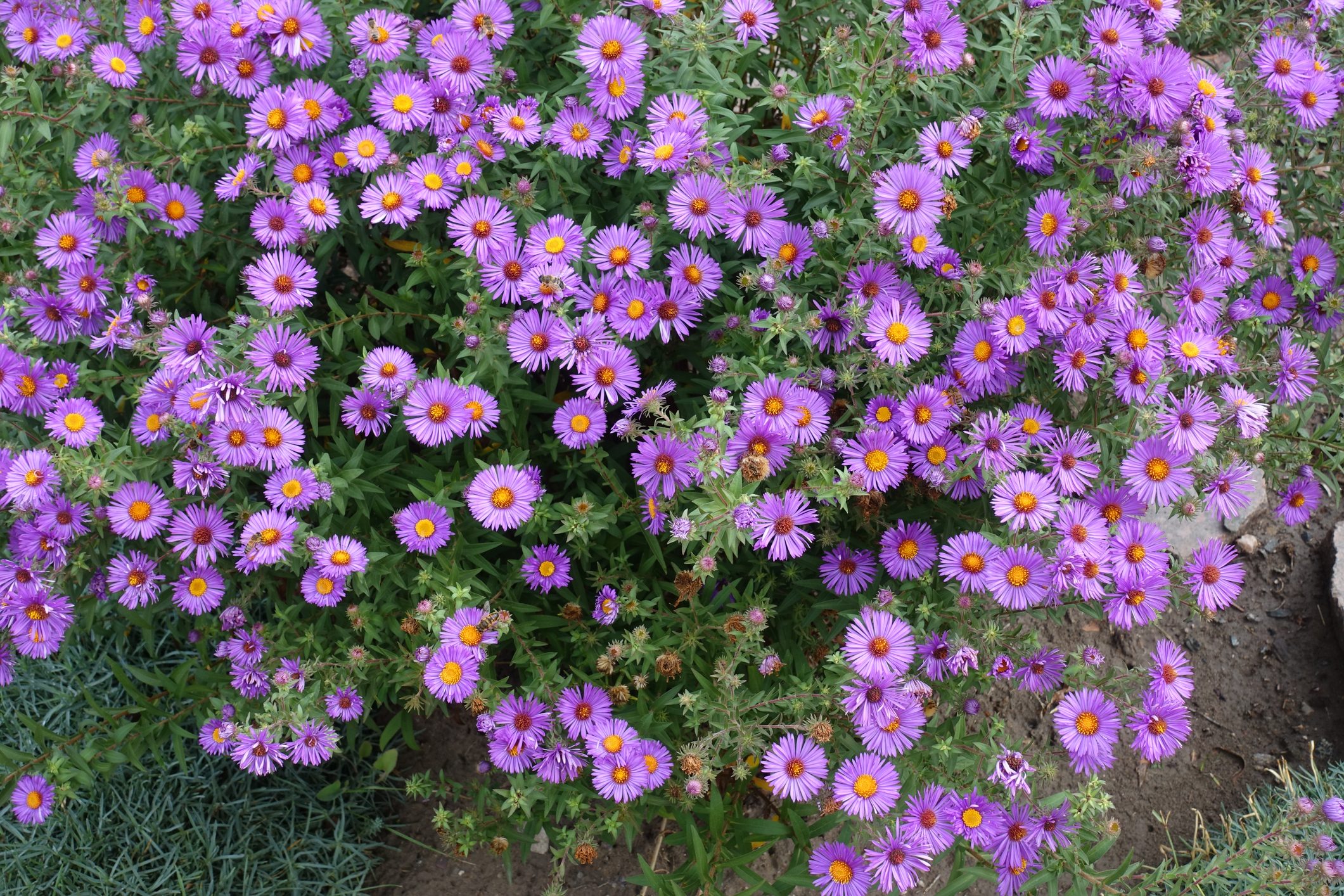
Autumn in my garden wouldn't be the same without fall asters. Butterflies and bees love them, too!
Our editors and experts handpick every product we feature. We may earn a commission from your purchases.Learn more.

Autumn in my garden wouldn't be the same without fall asters. Butterflies and bees love them, too!
Our editors and experts handpick every product we feature. We may earn a commission from your purchases.Learn more.
A highlight of autumn in my garden is seeing the purple, pink, and almost blue flowers of fall asters. They’re at their peak toward the end of September which means growing asters comes with the unexpected delight of spotting bright colors pop up among other perennials that have gone dormant for the season.
“Asters bloom late in the season with a mass of fresh purple flowers when many other plants have finished blooming,” explains Mary Jane Duford, a certified Master Gardener and founder of Home for the Harvest. “The dainty flowerheads attract bees, butterflies, and other pollinators. They are easy to grow and don’t typically need special care.”
Interested in adding this blooming fall plant to your fall garden for a pop of autumn color as well as wildlife? Here’s how to grow asters, plus tips for gardeners for keeping aster stems tidy and preventing diseases.
On This Page
Fall asters are native perennials that bloom late in the year, usually after Labor Day. Though recently given the tongue-twisting botanical genus name Symphyotrichum, everyone still calls them asters. They’re also commonly called New England asters or Michaelmas daisies, the latter because they’re often blooming on September 29, the Christian feast day of St. Michael the Archangel.
“Some people do not like asters because the plants can look messy or floppy without support,” Duford says. “In formal landscapes, asters may be seen as too wild or unkempt. Some types spread aggressively by seed or underground and may be aggressive neighbors in garden spaces.” However, there are ways to prevent this, starting with understanding the different types of asters, as well as their ideal growing conditions.
“Asters are most commonly purple, but can also be found in pink and white,” Duford says. “They also come in many sizes.” Most asters are hardy in U.S. Department of Agriculture Plant Hardiness Zones 4 through 8. Some popular types of fall asters include:
Fall asters are most often sold as plants. You can often find them at a local garden center in fall when they’re in flower. You may also find the plants in spring, but they won’t have flowers yet.
Asters aren’t often grown from seeds. Many seeds sold as “asters” are not the fall asters, but summer-blooming annuals that look like asters.
Once established, asters are a fall flower that does not require a lot of extra care. However, for the best growing results, you should aim to plant asters in the spring or early fall to allow the plant enough time to grow strong roots before harsh summer or winter conditions.
“Planting asters too late in the fall can cause problems in climates with freezing winters,” Duford says. “Most newly-installed perennials like asters need time to grow roots out into the soil past their planting hole before the ground gets too cold. If planted too late, the roots may stay shallow and weak. Shallow roots are more likely to dry out, freeze, or get pushed out of the ground.”
Duford recommends looking up the average first frost date for your area, then setting a reminder for 6 to 8 weeks prior to that date to plant your asters. “This is typically the best window for planting hardy perennials like asters in cooler climates, as it allows for the heat of summer to pass but also gives enough time for roots to start forming beyond the planting hole,” Duford says.
Fall asters grow best in full sun to part shade in well-draining soil. To plant an aster, dig a hole the same depth as the container the aster is growing in, and slightly wider. Pop the aster out of its container, spread the roots out a bit (especially if the plant has been in the container a while), place it in the hole and backfill with the soil you’ve dug out. Tamp down the soil around the plant and water it well.
Wondering how far apart to space asters? Spacing asters depends mainly on the cultivar, but the range is about 12 to 24 inches apart, according to Duford. Compact types can go 12 inches apart while tall or spreading varieties need about 24 inches between, she notes.
Start by choosing a cultivar that doesn’t get too floppy in the first place, Duford advises. “Many newer cultivars have been bred to have shorter, stronger stems,” she says. “For the varieties that do get quite tall, cut the stems back by one-third their length in late spring and even again in early summer if you like.” Ensuring asters get plenty of sun will also lead to stronger stems that don’t flop, she adds.
Powdery mildew, a fungal pathogen which thrives in high humidity, is the most common disease to affect asters. “It’s a grey powder on the leaves that usually starts on the lower leaves and spreads upward,” Duford says. “This weakens the plant and reduces flower quality.” Botrytis blight is another fungal disease commonly found on asters in cool, wet weather. “It causes soft brown spots on flowers, stems, and leaves.”
To minimize damage from both fungal diseases, Duford recommends planting asters in full sun with good air circulation, and avoid wetting the leaves while watering by using a drip line.
Mary Jane Duford is a certified Master Gardener, permaculture garden designer, and founder of the gardening website, Home for the Harvest. Her background as a civil engineer brings a scientific perspective to plant care and soil management.