


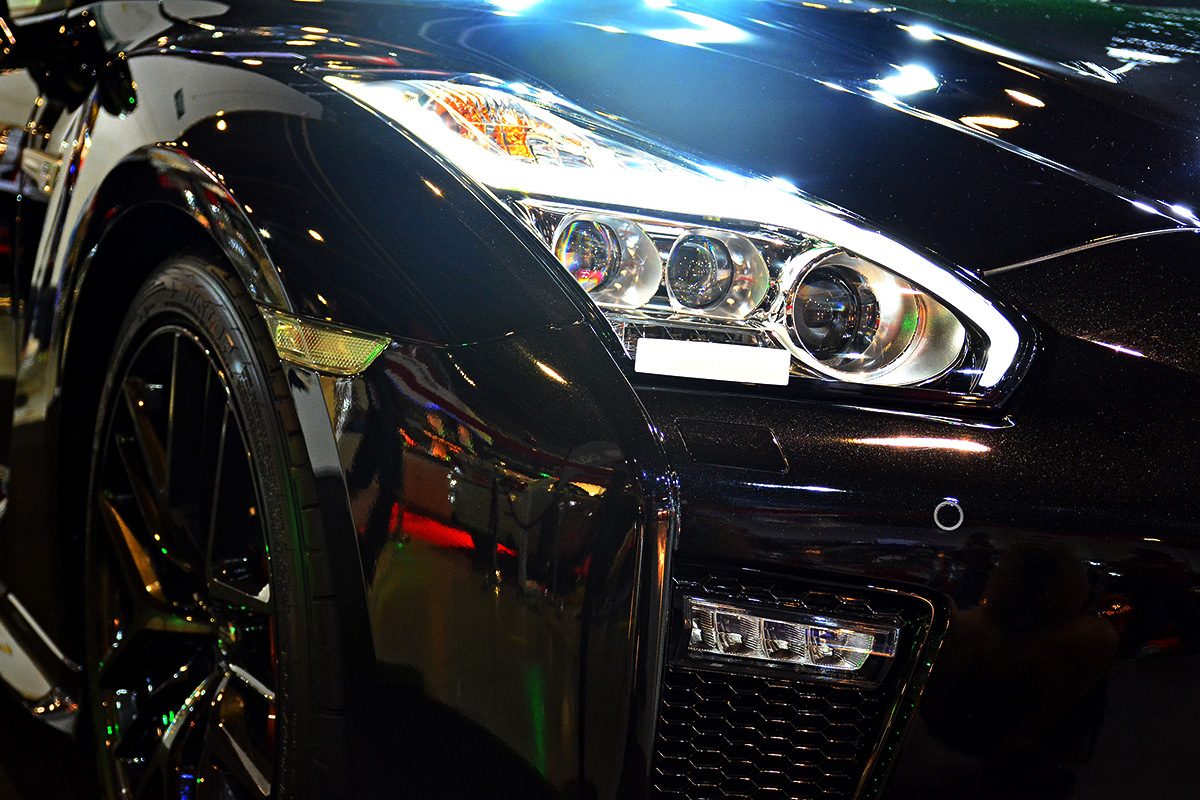

Before installing brighter bulbs, auxiliary or flashing lights on your car, ensure you're not breaking any state or federal laws.
When I first started driving in the 1960s, the only aftermarket car lights available were off-road light bars, fog lamps, spotlights, and dye-to-color clear bulbs. Today, aftermarket car lights are available in many different customizable options and configurations (flashing, blinking, every color of the rainbow) for both inside and outside your vehicle.
Adding LED underglow kits, eye-piercing headlight bulbs, tinted lenses or bumper light kits can improve visibility, add style, and a touch of your personality. However, they also come with legal limitations you should know and understand before investing time and money into aftermarket car lighting.
Not all lighting modifications are street legal. Read along as an aftermarket lighting expert and a Pennsylvania-certified vehicle safety inspector explain what’s legal and what’s not, which can save you from fines, failed inspections, or run-ins with the law.
What’s Generally Allowed
According to John Marsh from Tint World, “lights that meet federal Motor Vehicle Safety Standards are legal for on-road use. This includes factory-installed headlights, taillights, turn signals, and DOT (Department of Transportation) compliant replacements.” Marsh added, “Auxiliary lighting such as fog lights, driving lights, and off-road light bars can be installed as long as they are properly aimed, use approved colors [white or amber for the front, red for the rear] and are turned off, or are covered, when driving on public roads.” This is especially important if they exceed brightness or color regulations and are marked for “off-road use only.”
Joe Simes, a Pennsylvania DOT-certified safety inspection technician, said, “Each state has different laws for car lights.” To avoid legal issues and remain compliant with vehicle inspection laws (if applicable), carefully research your state’s regulations before installing any aftermarket lightning.
What Lights Are Not Allowed?
According to Marsh, “Blue or red front-facing, or blinking underglow lights, that can be confused with emergency vehicles, are not permitted for street use.” Flashing, rotating and strobe lights, or any installed lights or devices that block original equipment manufacturers (OEM) or DOT required lights/lamps are also illegal. Due to their design, snowplows and construction equipment are subject to their own specific regulations.
Multicolored LED underglow, under-chassis, wheel well, and engine compartment lighting, as well as halo-style aftermarket lighting, are very popular today. According to Lighting Trendz, “No state in the U.S. allows color-changing exterior lights while driving on public roads.” Color-changing lights are only permitted when your car is parked or at car shows. Extremely bright lights over 3,000 candelas (cd) violate federal vehicle safety statutes. FYI: One “cd” approximately equals the light of one candle, or one candle power.
Other aftermarket lighting that is not allowed includes:
- Blue or green headlights are illegal in most states. “Different shades and colors of white lighting are usually not allowed unless originally installed on the vehicle at the factory,” said Simes.
- Brake lights other than red are prohibited.
- Tinted, blacked out or non-approved colored taillights (blue, green, white, purple, etc.) that reduce bulb brightness or reflectiveness are illegal in most states.
- Interior flashing lights, if visible from outside, can distract other drivers and are mostly prohibited.
NOTE: Rear turn signals/ taillights can be amber or red, but both taillight colors must match.
Safety and Visibility Concerns
“Improperly installed or overly bright lighting can create glare and reduce visibility for other drivers, especially if the beam patterns are misaligned,” said Marsh. “Conversely, inadequate lighting or poor-quality bulbs can reduce a driver’s own visibility when driving at night, or in severe weather conditions.”
“All headlights, driving lights and auxiliary lighting must be properly aimed and adjusted,” said Simes. Properly aligned low and high beams coupled with approved lighting greatly improve driving safety by illuminating more of the road in front of us—without blinding oncoming traffic—which helps prevent accidents.
What Happens If I Drive With Illegal Lights?

Driving with illegal lights can result in, hopefully, nothing more than a verbal or written warning or a “fix-it” ticket. However, depending on the situation, being cited for a moving violation, being fined, and, depending on the state, having “points” added to your driving record or failing a vehicle safety inspection are common consequences.
Simes added that “in extreme cases, a vehicle having flashing red or blue lights that could be considered imitating an emergency vehicle or impersonating law enforcement can lead to your vehicle being impounded or your arrest.” The real headache would be the time and money wasted on an expensive modification that needs to be removed.
How To Stay Legal
To avoid issues with police and vehicle safety inspection regulations, research the appropriate laws and regulations in your state and municipality before installing any aftermarket lightning components. Deal with reputable aftermarket retailers who know local laws and regulations involving:
- Lighting, bulbs and other components (headlamp assemblies) that are clearly marked “DOT” or “SAE” (formerly Society of Automotive Engineers) Certified meet Federal Regulations Codes, making them legal in all 50 states.
- Proper safety standards for brightness, beam pattern, and color.
- Lighting kits and components labeled “off-road use only.”
- Legal colors for headlights (white), stop lights (red), taillights (red), turn signals (amber-front/rear or red-rear), license plate lights (white).
- Flashing red or blue underglow or interior lighting.
- Chassis, and other supplemental or non-OEM lighting.
FAQ
Are LED headlight conversions legal?
Generally, yes. “When an entire headlight assembly [the capsule that houses the headlight bulbs] is engineered, tested, and marked as DOT/SAE compliant, LED headlights are legal replacements for Halogen or Xenon (high-intensity discharge (HID) headlight bulbs,” said Marsh. “Companies such as ORACLE Lighting focus on precision optics, proper beam cutoff, and test their LED conversion components to meet DOT approval for your specific vehicle.” This ensures compliance with federal lighting codes while seeing the road clearly without blinding others.
“Look for replacement headlights that meet federal regulations, making them legal in all 50 states,” added Simes.
PRO TIP: Use the correct type of headlight aimer for your specific application. Simes said, “An LED headlamp assembly CANNOT be properly aimed using an aiming device designed only to aim halogen headlights.”
Will aftermarket headlights void my warranty?
It depends. All OEMs have their own specific warranty policies and rules. Of course, the OEM will not replace aftermarket headlight bulbs under the factory warranty. Furthermore, added Simes, “If a [aftermarket] headlight causes a problem or failure with another component or wiring [due to overheating, electrical compatibility or physical fitment] it may void the factory warranty.”
About the Experts
- Joe Simes has over 20 years of experience as an ASE and Toyota Master Technician. Joe is a PennDOT certified emissions and safety inspection instructor and inspector, and a Pennsylvania Department of Education certified automotive technology instructor at North Montco Technical Career Center in Lansdale, PA., as well as serving as the former (retired) deputy fire chief and training officer for Montgomery County, PA. (In person and email interviews, Oct 9 and 15, 2025)
- John Marsh currently serves as direct contact for all vendor partnerships and compliance with all applicable state and federal regulations and policies at Tint World since 2021. Before that John served a COO and Franchise Developer Partner for other organizations. His experience within the electronics industry stems from his previous business ownership experience, as well as personal love and passion for all things automotive aftermarket. (Electronic communication, Oct 16, 2025)
Resources
- Code of Federal Regulations: “Lamps and reflective devices” (Sept 29, 2025)
- Commonwealth of Pennsylvania, “Vehicle Equipment And Inspection Regulations” (Oct 16 2025)
- Driving Laws: “Can I Legally Customize my Car Lights?” (Oct 17, 2025)
- Lighting Trendz: “Automotive LED Lighting Laws by State (2025 Guide)” (Oct 1, 2025)
- U.S. Department of Transportation, National Highway Traffic Safety Administration: “FMVSS 108 Lamps, Reflective Devices, and Associated Equipment” (Oct 15, 2025)
Related
- Do You Know What That Little Button on Your Seat Belt Is For?
- What Those Lines on Your Backup Camera Really Tell You
- Here’s What The Small Panel On Your Car’s Front Bumper Is For


